Part 91 flying saw a 4.1% increase, followed by a 1.3% gain for Part 135 (jet cards and on-demand charter) and 0.6% for fractional ownership programs
ARGUS International’s TRAQPak monthly report showed a 2.6% year over year gain in terms of flight activity powered by an 11.8% increase in Part 134 large jet flights. Part 135 represents flying through jet card programs and on-demand charter. In terms of fractional ownership, Midsize jets saw a 7.9% boost, however large jet flights dropped by 19.9%. TRAQPak didn’t provide any commentary for what drove the numbers.
April 2018 vs. April 2017
| |
Part 91 |
Part 135 |
Fractional |
ALL |
| Turbo Prop |
5.2% |
‐0.1% |
‐7.6% |
2.6% |
| Light Jet |
3.7% |
‐0.4% |
0.3% |
1.8% |
| Mid‐Size Jet |
1.4% |
‐0.7% |
7.9% |
2.2% |
| Large Jet |
6.2% |
11.8% |
‐19.9% |
4.7% |
| All Aircraft |
4.1% |
1.3% |
0.6% |
2.6% |
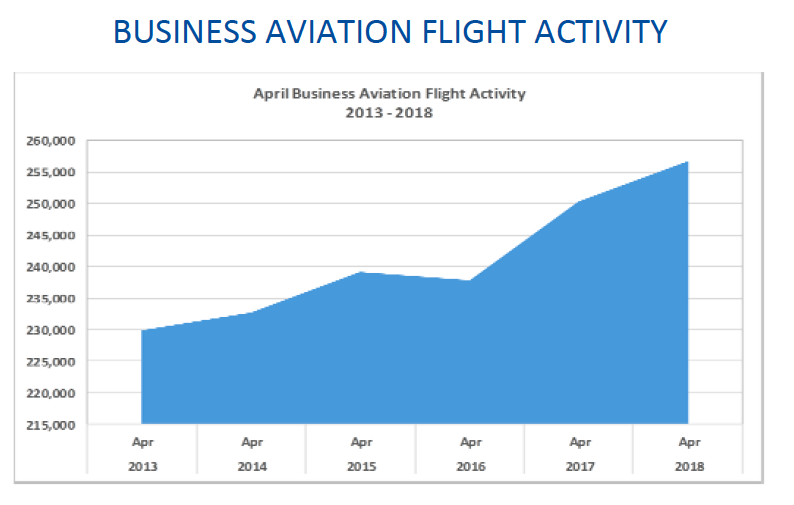
Overall, private aviation continued its long and slow climb back from the depths of the Great Recession nearly a decade ago. April marked the fourth time in five years that there was positive growth reaching over 255,000 flights.
![Screen Shot 2018-05-14 at 5.33.59 PM]()