General aviation generated over $178.1 billion in U.S. GDP and supported more than 1.3 million jobs nationwide, according to an industry report.
The Impact of General Aviation on State and Local Economies, State Reports 2026, was published by the non-profit American Association of State Highway and Transportation Officials. It sought to calculate the annual impact of general aviation nationwide.
In its fourth edition, first published in 2023, the report draws on surveys, reports, studies, and public data to calculate general aviation’s annual economic impact.
Scope of general aviation
The report notes there are 4,400 public-use GA airports nationwide.
That includes 19,500 landing facilities, compared to 549 airports served by scheduled commercial airlines.
This large number supports small and rural communities by providing access to new business and aid during natural disasters or crises.
In 2023, 214,000 active GA aircraft logged 28.6 million flight hours and completed an estimated 120 million passenger journeys.
Those aircraft included not just private jets, but also single-engine piston airplanes, helicopters, and more.
Bolstering the workforce
In 2023, general aviation supported 1.3 million jobs across the United States, with an average salary of around $104,000. GA produced $107.5 billion in labor income and contributed $178.1 billion to the nation’s GDP.
Meanwhile, nationwide there were nearly 4,000 FAA-certified repair stations, over 700 FAA-approved pilot training locations, and more than 3,400 fixed base operators. And in 2025, over 340,000 had FAA mechanic certificates.
As for pilots, the U.S. had 887,000 active pilots in 2025, up 196,000 since 2020.
The report also highlighted 370,000 active student pilots in 2025, up from 222,600 in 2020.
General aviation uses
The report also described the industry’s business and humanitarian uses. 2018 data indicated that most companies using business aviation were small or mid-sized.
Regarding rural areas, in 2018 surveyed pilots said that 43% of their destinations were airports with infrequent or no scheduled airline service.
A third of their flights in the past year were to destinations that never had commercial air service.
Roughly 40% of business aviation trips involved stops at more than one destination.
As for productivity, business aircraft passengers spent nearly two-thirds of their time aloft working.
On commercial flights, those same passengers worked only 42% of the time.
That same data reported that 38% of business aircraft pilots had flown humanitarian missions in the past year, with those pilots averaging three such missions.
Beyond business, general aviation aircraft can support everything from search-and-rescue operations and surveillance to locating missing people, disaster response, and more.
Agricultural and medical uses
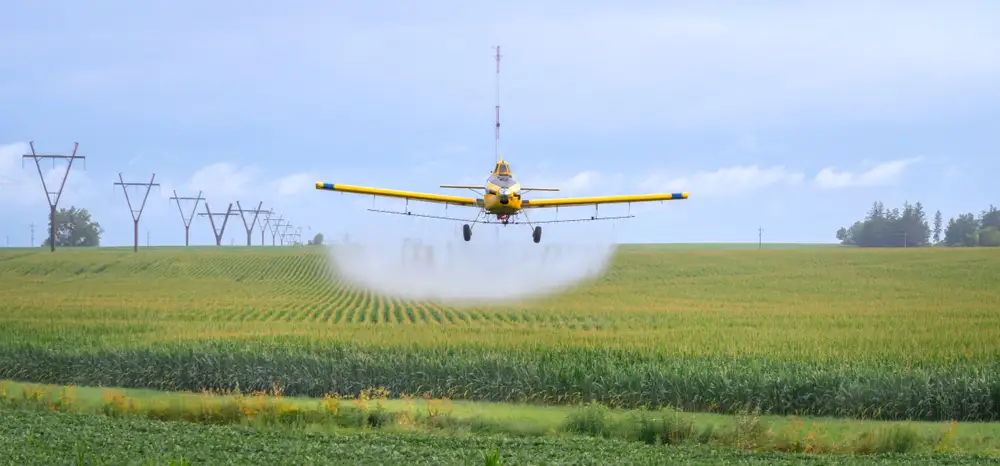
Data they cited from the National Agricultural Aviation Association said that around 1,560 crop-dusting businesses use aircraft to support their farms and communities.
Moving past business, law enforcement, and agriculture, GA aircraft can also help medically. Aircraft can bridge the distance between people and trauma centers.
A 2017 academic analysis estimated that nearly 30 million Americans lacked access to a Level I or II trauma center within 60 minutes of home. Rural residents and other populations faced the biggest geographic barriers to health care.
According to the Association of Air Medical Services, fixed-wing aircraft transport ~150,000 patients annually over long distances. Medical helicopters transported ~400,000 patients.
The Air Medical Operators Association reported that its 20 member operators employ about 5,000 pilots, 600 physicians, 5,500 nurses, 5,500 paramedics, and operate more than 1,200 aircraft.