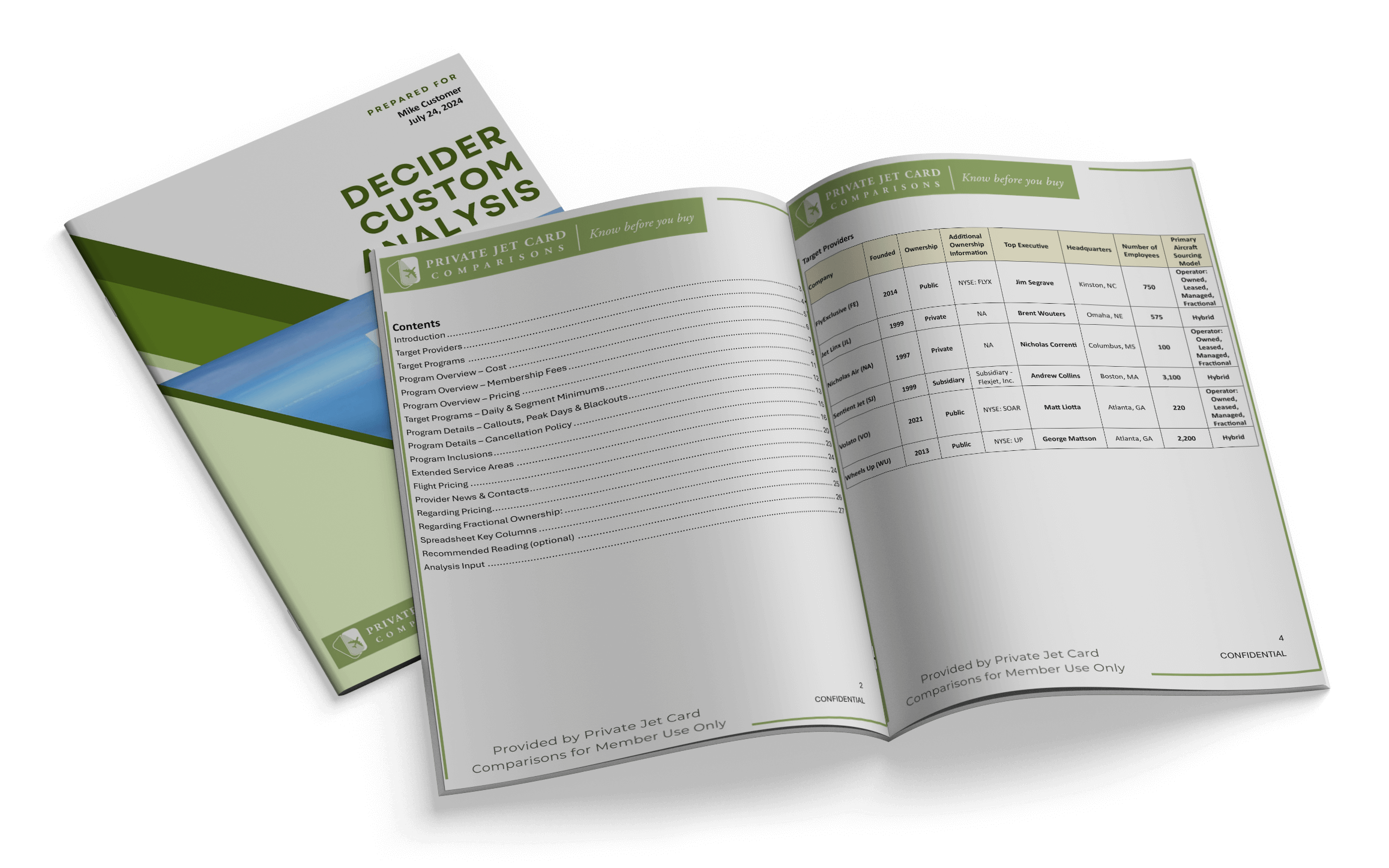
There are many variances to jet cards that differentiate seemingly similar offerings in important ways.
Some offer guaranteed rates and availability, but the aircraft types and vintages you get, how charges are calculated, and the terms for booking and canceling can vary widely, along with a myriad of other rules and policies.
At the same time, dynamic pricing can vary widely, and you don’t know how much markup is on each quote.
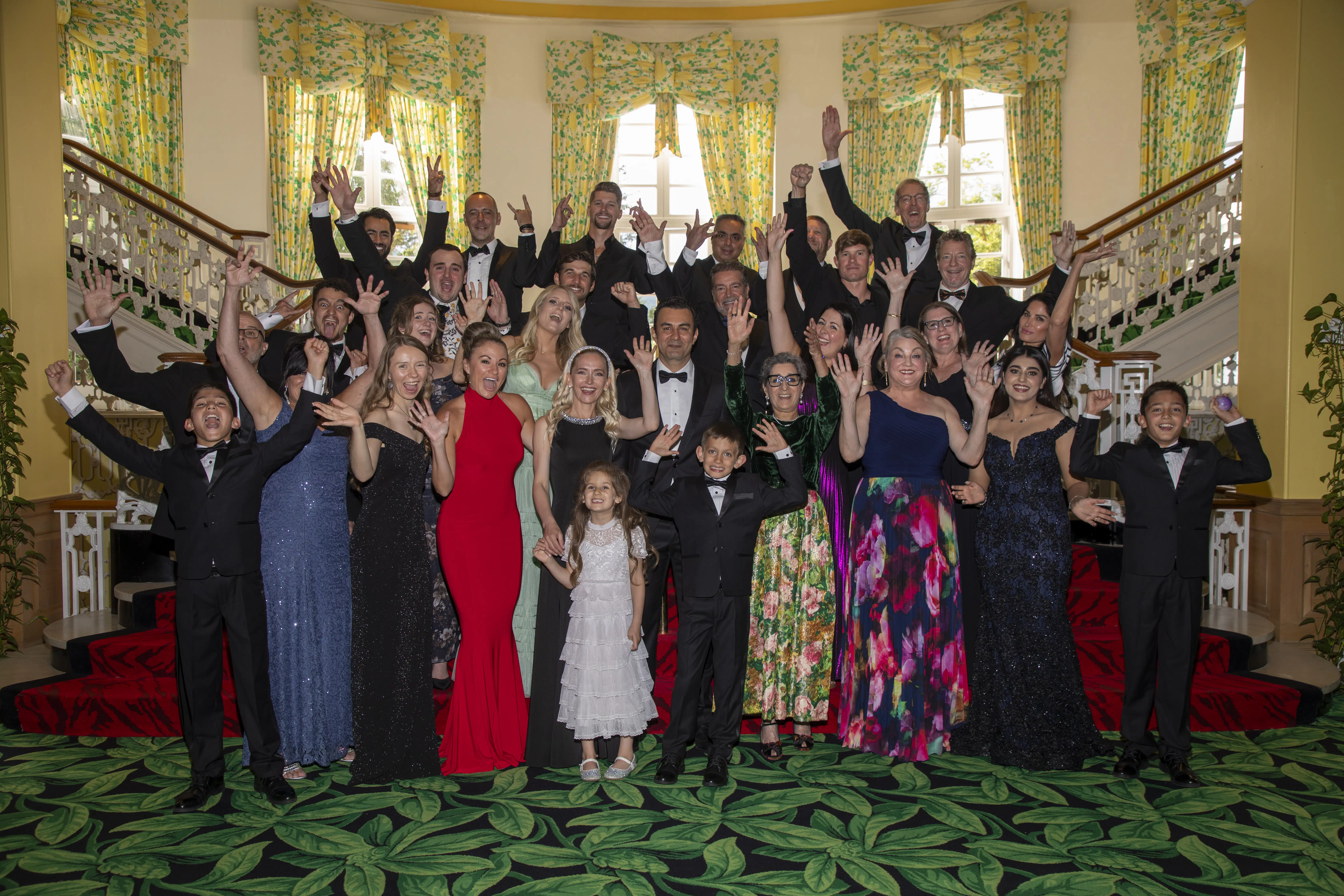
Richard Zaher (pictured center) says that early in his career, working for a now-defunct broker, he was reading an article in a major newspaper.
The founder of Paramount Business Jets says, “There was one article in particular that came out (and it was), ‘Why are private jet charter brokers so sleazy?'”
Zaher tells Private Jet Card Comparisons, “I read that article, and it really made me upset.”
He continues, “I felt like they were talking to me directly. And I was like, ‘This is not me. This is not what I represent. This is not who I am.'”
One of his clients, who had been happy with the service, the airplanes, and the flights, called one day to say he wasn’t going to be flying, and he wanted to get his unused funds back.
The company charged a 15% restocking fee.
Zaher argued to the owners that the client had been happy, and he might come back.
The restocking fee was a policy, and management wouldn’t waive it.
When Zaher told the client, “He was pissed.”
Zaher told him it was out of his hands, undermining his future relationship with the client.
After similar incidents, Zaher started Paramount Business Jets with a $5,000 loan from his father.
Transparent Pricing
“I wanted what we do to be transparent to the consumer,” Zaher says.
He said a primary complaint about fixed-hourly-rate jet cards sold via brokers was inferior aircraft, and that with dynamic pricing, clients never knew how much markup their broker was adding.
When were they getting a good deal?
When were they getting taken advantage of?
There was too much time-consuming back-and-forth, he says.
After founding the company in 2005, in 2010, he came up with a plan.
His solution was a jet card with a fixed markup per quote.
Zaher also provided the charter operator’s name, something brokers often hid, fearing the potenial custom would go directly to the operator.
Quotes showed the operator price and the markup.
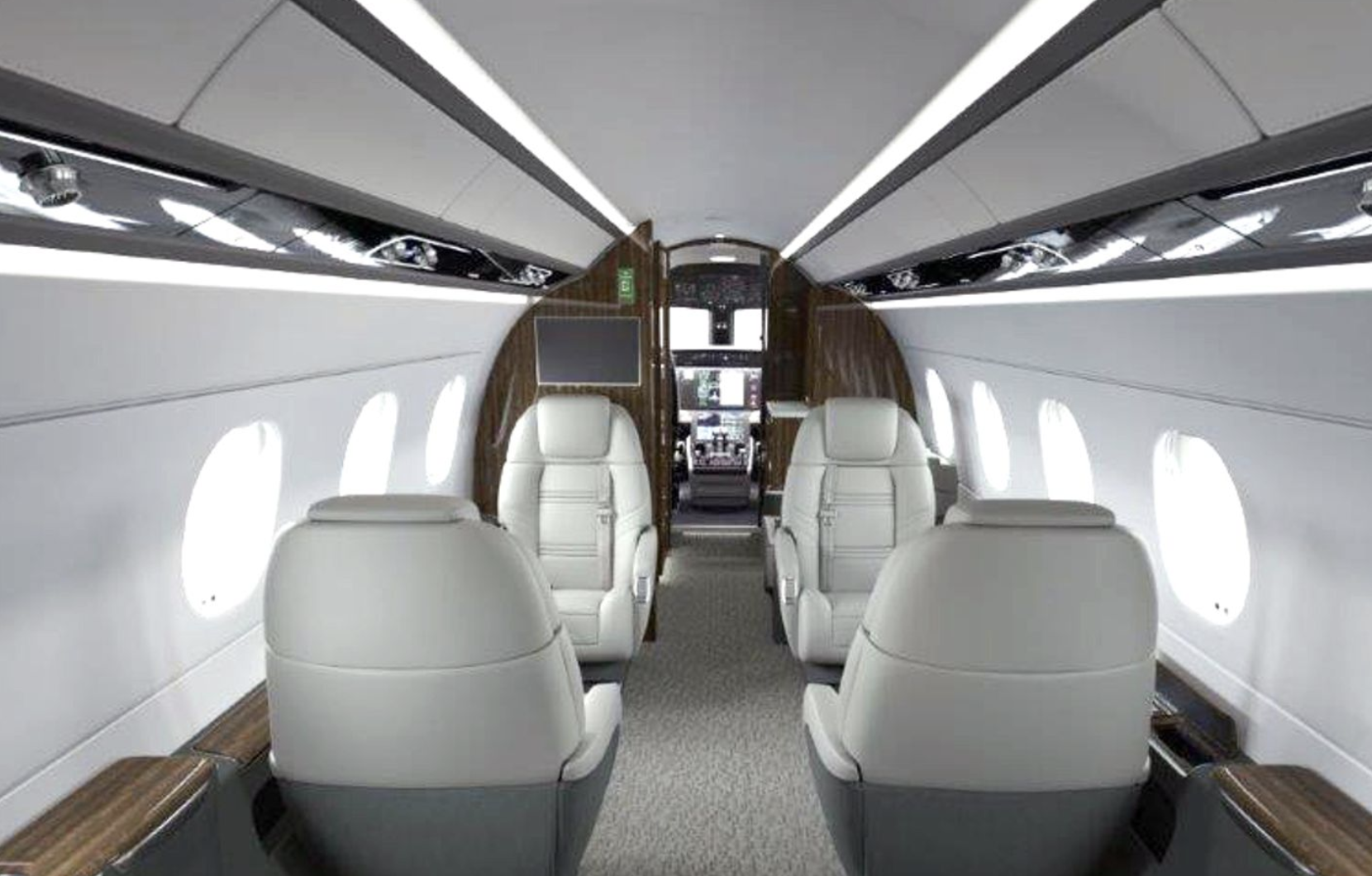
Jet card members can specify aircraft types, amenities, cancellation terms, operators they wish to use, or don’t want, and so forth.
Its jet card wholesale-plus management pricing accounts for 30% of the Virginia-based broker’s sales.
Four deposit levels range from $100,000 to $1 million.
The company recently sold its first million-dollar jet card.
Markups are expressed as a percentage of the wholesale cost, and decrease as you deposit more.
They range from 16% down to 10%.
There is a fixed management fee that ranges from $1,600 per flight to $1,000.
You pay whichever is higher, the percentage or the fixed fee.
As an example, at the entry Emerald tier, on a flight, the operator was charging $30,000; you would pay $34,800, since the 16% markup of $4,800 is higher than the fixed $1,600 fee.
Zaher says Paramount Business Jets will provide as many options until the client finds the aircraft and configurations that meet their needs.
5-Star Ratings
Zaher says clients appreciate the transparency.
The company scores a 4.9 rating on Trustpilot.
However, the reviews are less about the jet card program and more about Paramount Business Jets’ people
Reviews use terms like “rock star.”
Stuff goes sideways often in aviation, including private jet charter.
One customer who left a 5-star rating wrote, “Even though there were two unforeseen issues (the closest airport had a fueling issue and a dense fog delay), Paramount made the necessary adjustments to get us to our destination as efficiently as possible.” Smooth and easy trip once we met up with the crew.”
Zaher says that clients who don’t want to join its jet card can book at ad hoc pricing.
He is also nonplussed that more companies haven’t followed its lead on its jet card pricing approach.
Zaher says, “Our pioneering transparent jet card was never created as a marketing tactic,” adding, “It was simply a natural result of who we are and what we believe.”
Richard Zaher Background
Zaher emigrated to the United States with his parents from Afghanistan after the Russian invasion in 1979.
After five years in India, they were able to get their paperwork to come to the United States.
Zaher attended Embry-Riddle Aeronautical University before moving into an entry-level sales role where he went hotel to hotel pitching his brokerage to concierges.
He says his team makes the difference.
Including Zaher, there are 18 people, all pictured on the website with their roles.
Outside the company, Zaher started a charity called Best You, Best Me.
It is based on random acts of kindness.
After being told of hardships in West Virginia’s poorest county, the charity sourced and delivered over boxes of food, supplies, and clothing in the first of several trips.
Zaher says not all random acts of kindness require money or resources.
In one case, an injured fawn was struggling on a busy highway.
Zaher stopped his car, and the traffic.
With honking horns blaring, he took the young deer to the side, where it got to its feet.
Before it walked off into the woods, he said the deer looked him in the eyes.
Zaher says expanding the company is not about boosting sales.
He says he is motivated by creating job opportunities in the country that gave him everything he has.
In terms of the broker space, he says, “Anyone can call themselves a broker, but those chasing quick money usually lose both their reputation and their business very quickly.”
He adds that since 2005, brokers have “improved significantly,” but “There is still work to do.”