December 10, 2025
Illegal private jet charter, shared private jet flights put flyers at risk, but experts say an FAA crackdown is unlikely until it’s too late.
While the Federal Aviation Administration could easily crack down on illegal private jet charter and shared flights, experts speaking at Corporate Jet Investor said it will likely take a tragedy to make it an oversight priority.
In the meantime, illegal flights mean consumers could find themselves on aircraft that are not maintained to commercial standards, flown by pilots who lack training.
You could also face liability not covered by insurance if something goes wrong.
Moderator David Hernandez, an aviation attorney with Vedder Price and a former FAA prosecutor, said, “To use this ugly analogy, (illegal charters are) spreading like Covid through the industry, and it’s going to touch everything and everyone sooner or later.”
The panel discussion, which took place earlier this month in Miami at the business aviation conference, covered two types of illegal charter.
One includes selling individual seats by private jet owners, fractional-share owners, jet card customers, and ad hoc charter customers.
The other illegal charter activity involves jet owners and operators selling flights on aircraft that are not certified by the national aviation authority for commercial missions.
In the U.S., it is referred to as Part 135.
Part 91K rules cover fractional operators, while Part 91 refers to airplanes operated by their owners for non-commercial use.
Aircraft owners who want to earn charter revenue need to have their aircraft on a Part 135 certificate.
READ: FAA warns pilots, consumers about illegal charters; lists red flags
Illegal charters in the form of shared private jet flights made headlines after a report in The Wall Street Journal.
Panelists at the business aviation conference were split on whether shared flights, if done legally, were a good idea.
Currently, jet owners, fractional share owners, jet card clients, and charter customers offset costs by selling seats on their flights, often via private online groups.
Broker Dan Harris of Ironbird Partners called the jet-sharing a “missed or failed opportunity as an industry.”
He said, “The consumer obviously wants it, and we have been unable to provide a solution for the consumer, and because of that, they have gone to WhatsApp groups and other ways to fill that need.”
Harris noted that sharing is legal via confusing self-aggregation.
Another broker, Jacquie Dalton of Sparrow Executive Jets, took an opposing view.
She said, “I don’t necessarily think that the consumer wants it as much as there are players in the industry who are telling the consumer to want it and creating a problem that they have a solution for as they move it to ride sharing and seat selling.”
Dalton told attendees that she sees seat-sharing as part of a larger effort that includes selling empty legs, which, combined, she believes, hurt customers who pay top dollar to fly when they want and expect well-maintained airplanes and crew who are rested and ready to go.
“We have an obligation to provide safety and a quality of service,” she says, adding, “The problem with ride sharing and seat selling isn’t just that (some is) illegal, it’s really degrading the value of ultimately what it takes to run a good flight operation.”
Hernandez added, “One of the big issues I think is the risks… It’s an illegal activity, and trying to convey to people what this means, at least from a legal perspective, you really have no rights. If something goes wrong, you can’t really sue somebody for being involved in an illegal activity.”
Hernandez said websites that have presented themselves as platforms for self-aggregation deny responsibility for illegal activity that occurs on their platforms.
Selling unused seats on Part 91 and Part 91K – fractionally owned aircraft – is always illegal and falls outside self-aggregation.
Harris added:
‘For the consumer, the major risk is from an insurance standpoint. So, if you were flying on an airplane that is not on a legal (Part) 135 certificate, (and) there is an incident, there is no insurance protection for you, your family, or your business. So, if you are a wealthy individual and you want to save $2,000 or $5,000 and buy a seat, you do not know that the airplane you’re flying on is (Part) 135 and that airplane has an incident, your own insurance policy, the airplane’s insurance policy can be void, and you could potentially lose a lot more. You’re risking a lot more just to save maybe a few thousand dollars.’
Southern Sky Aviation’s Barry Lambert said the illegal seat selling creates even bigger risks.
He said, “By selling seats on a private jet, we don’t have a sterile flight deck. We don’t have secure doors. So now (passengers) have access to the pilots. But now we’ve put anywhere between four to eight passengers that don’t know each other into a closed environment.”
Dalton said, “We call it market expansion, but the fact is there’s phishing, there’s fraud, there’s scams.”
READ: FAA issues notice on Illegal Charter: ‘Putting the flying public in danger’
Hernandez said it would be relatively easy to shut down seat sharing on Part 91 and 91K aircraft.
He said:
‘You could shut this stuff down with three things – a motivated (operations or FAA) inspector that’s getting paid, a couple of subpoenas, and press releases. And in the press releases you have to target the users of the product. And there’s nothing that scares the hell out of someone more than getting a subpoena. So that’s how you stop it. And you get the (inspectors) at…the biggest, busiest (airports). And every (Part) 91 flight, you check and you ask tough questions. And you also tell NetJets and Flexjet and all the other fractional program operators: if you don’t church yourselves up, you’re going to get subpoenas as well. And that’ll probably end in a matter of a week because subpoenas, they ruin your day.’
Harris stood by his belief that there is consumer demand.
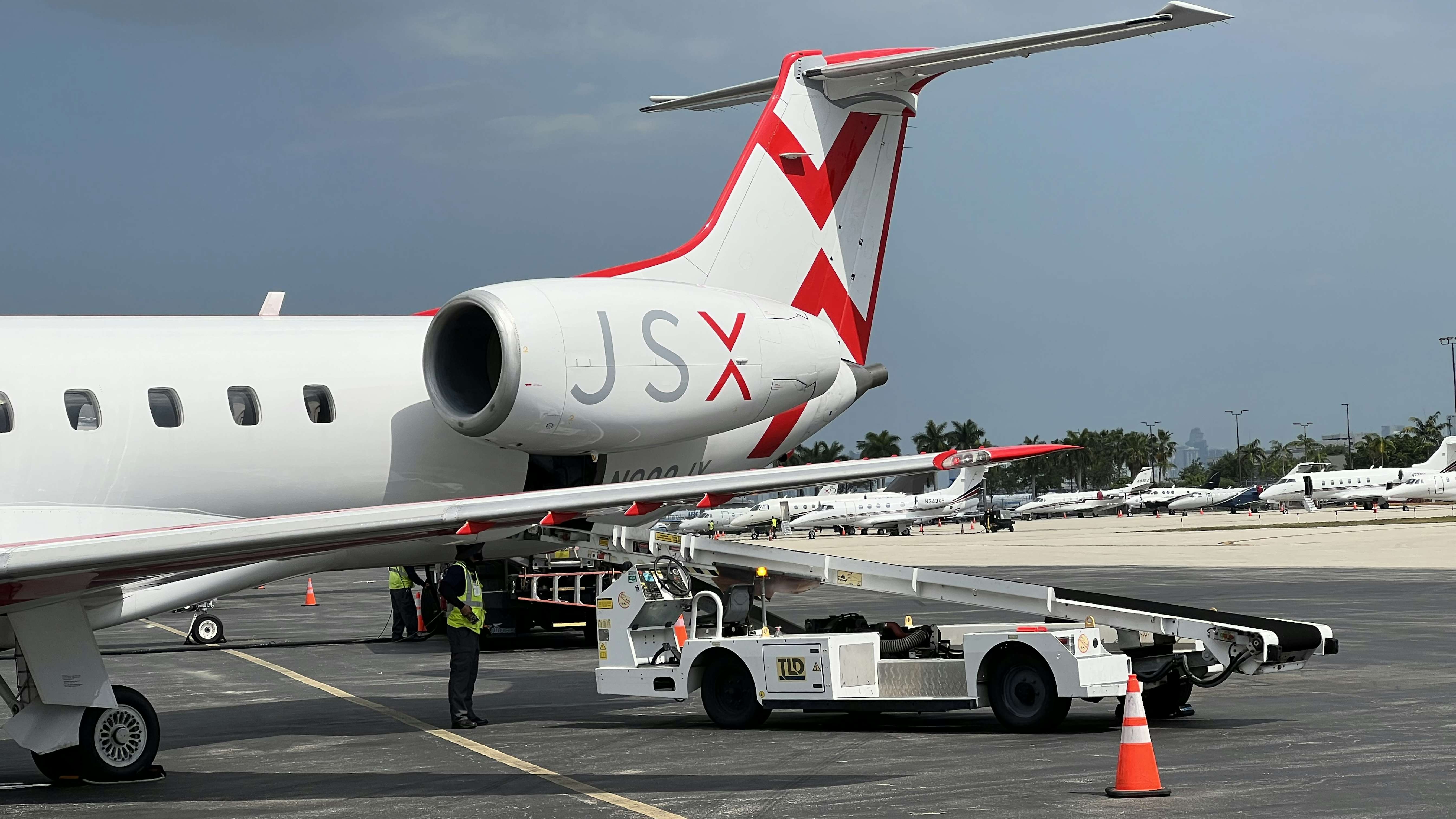
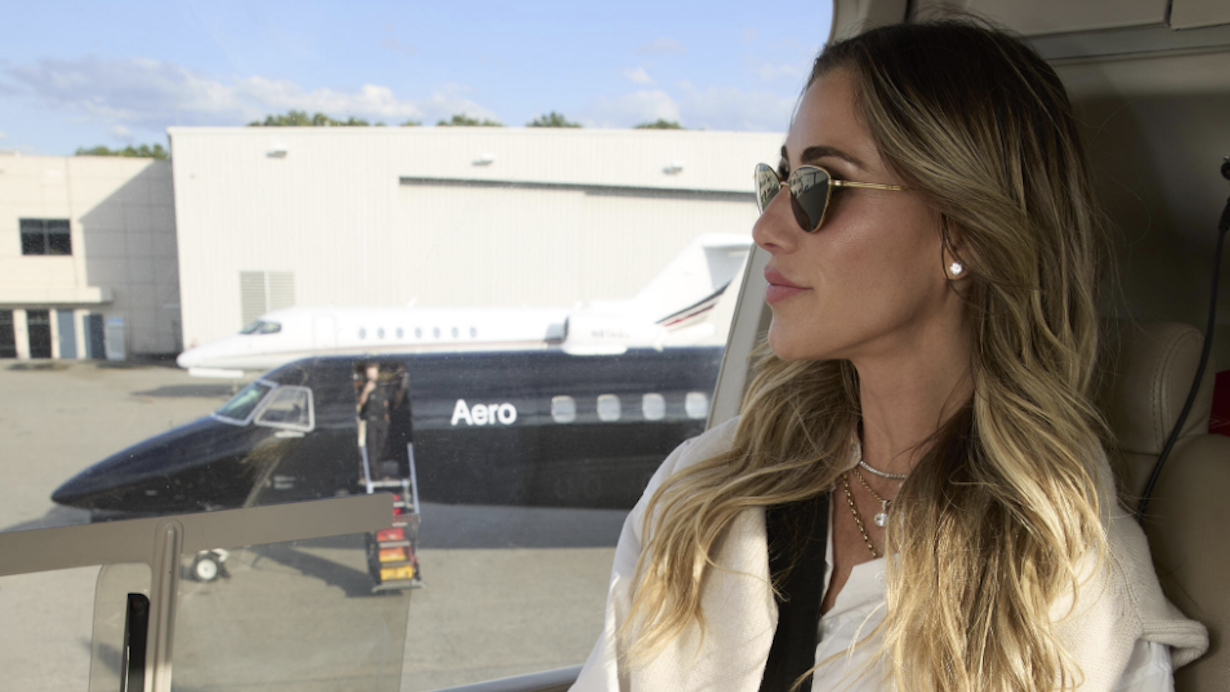
He pointed to JSX, Aero (operating as Public Charters under Part 380), and start-ups like Magnifica Air (which will operate under Part 121) that offer by-the-seat products, use private terminals, and operate within the legal framework.
Harris said it needs to be easier and more transparent to legally self-aggregate.
Lambert, however, said the extra revenue of even self-aggregation probably wouldn’t offset the tradeoff for aircraft owners from wear and tear.
“It opens up to another market segment that may not know how to treat the interior of the aircraft or behave appropriately in that setting,” he said.
Nearly one-third of Private Jet Card Comparisons’ subscribers (32.9%) say they are interested in shared flights or buying individual seats.
However, that’s down from 42.8% in 2022.
READ: Websites, online groups offer cheap private jet seats. Is it legal?
The second part touched on illegal charters in general.
Hernandez asked, “How unsafe are illegal charters?”
Lambert told the audience:
‘Depending on how the operation itself is, there’s no one auditing the maintenance. There’s no one auditing the pilot training. I can think of a couple operators right now that hire pilots from the flight school to fly as a safety pilot so they don’t have dual type (rated) crew. They do not have commercial insurance. They’re getting a lot of their maintenance completed by through the fence mechanics. They’re not going to (Part) 145 repair stations. The documentation is poor on the maintenance.’
In one case, an operator was using a “maintenance manual that was 15 years out of date.”
READ: Air Charter Association marks Sala’s death, highlighting illegal charter
Lambert added that pilots who operate illegal flights are likely to lose their licenses.
Illegal charters also hurt operators who invest in complying with regulations.
He said, “We’re certificated to be able to do charter. We have gone through the process. We uphold our standards that do cost more. And so, if there’s a victim here, it’s actually legal charter because they’re being held to a standard that the FAA does police, but they don’t police the great charter because of the 91 activity.”
Lambert said illegal charter operations orchestrated under dry leases are particularly risky for flyers.
“You look at dry leasing, Everything puts the responsibility and the liability back on the user. Charter…takes the liability off of the actual user,” he noted.
He added, “If you dry lease an airplane or you accept the responsibility, you are legally responsible to the FAA to make sure that you’re compliant in all aspects of the operation of the flight.”
Hernandez doesn’t expect to see much action from the FAA on the illegal seat-sharing.
He said, “We’re not here to beat up on the FAA. They just have limited resources.”
He recalled during his tenure there, “I had 500 cases at a time.”

Find the perfect solution for your private aviation needs
Save Time. Buy Confidently.
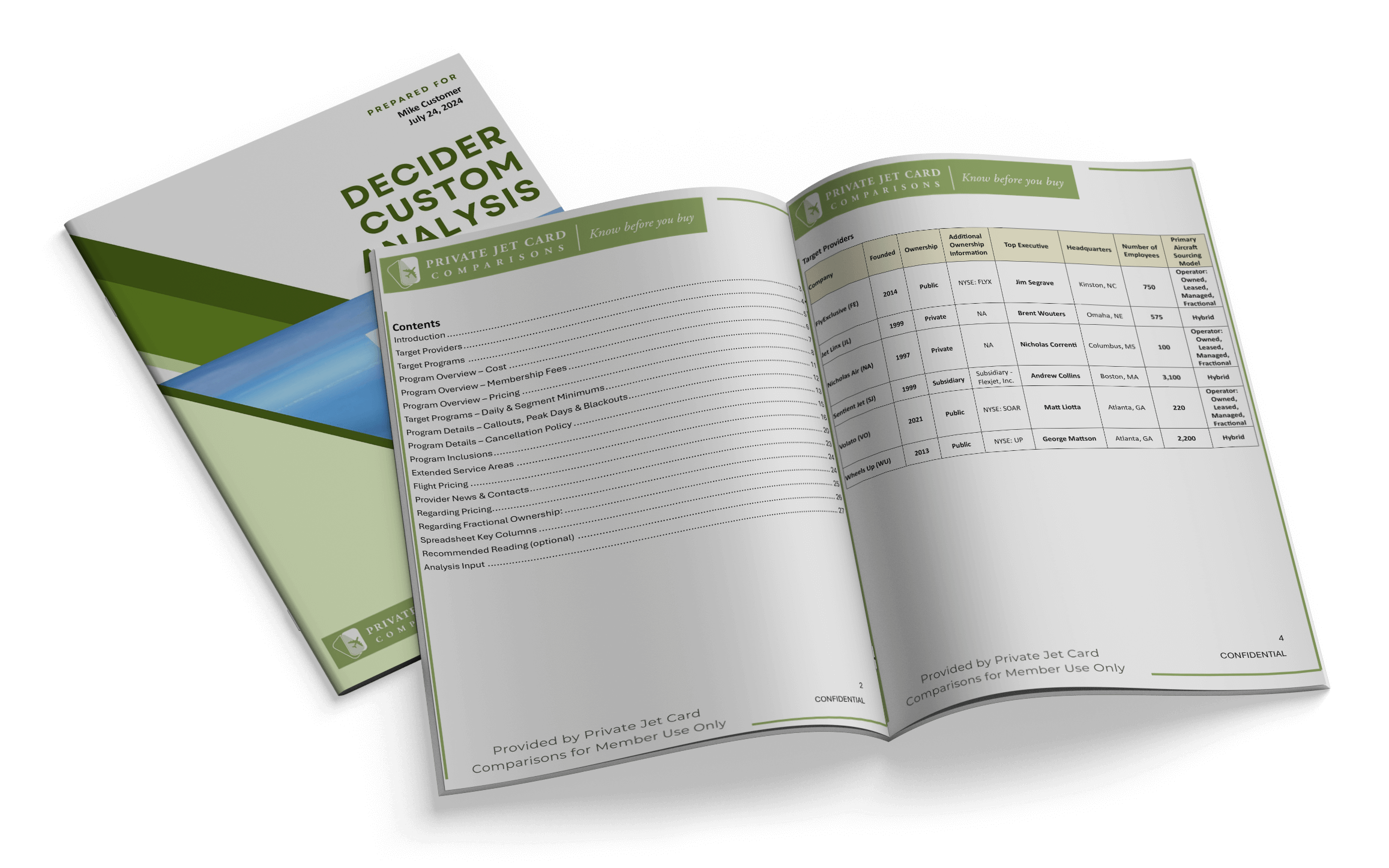
Receive an apples-to-apples comparison of programs that meet your needs from more than 500 jet card and fractional options covering 65 points of differentiation and over 40,000 data points.