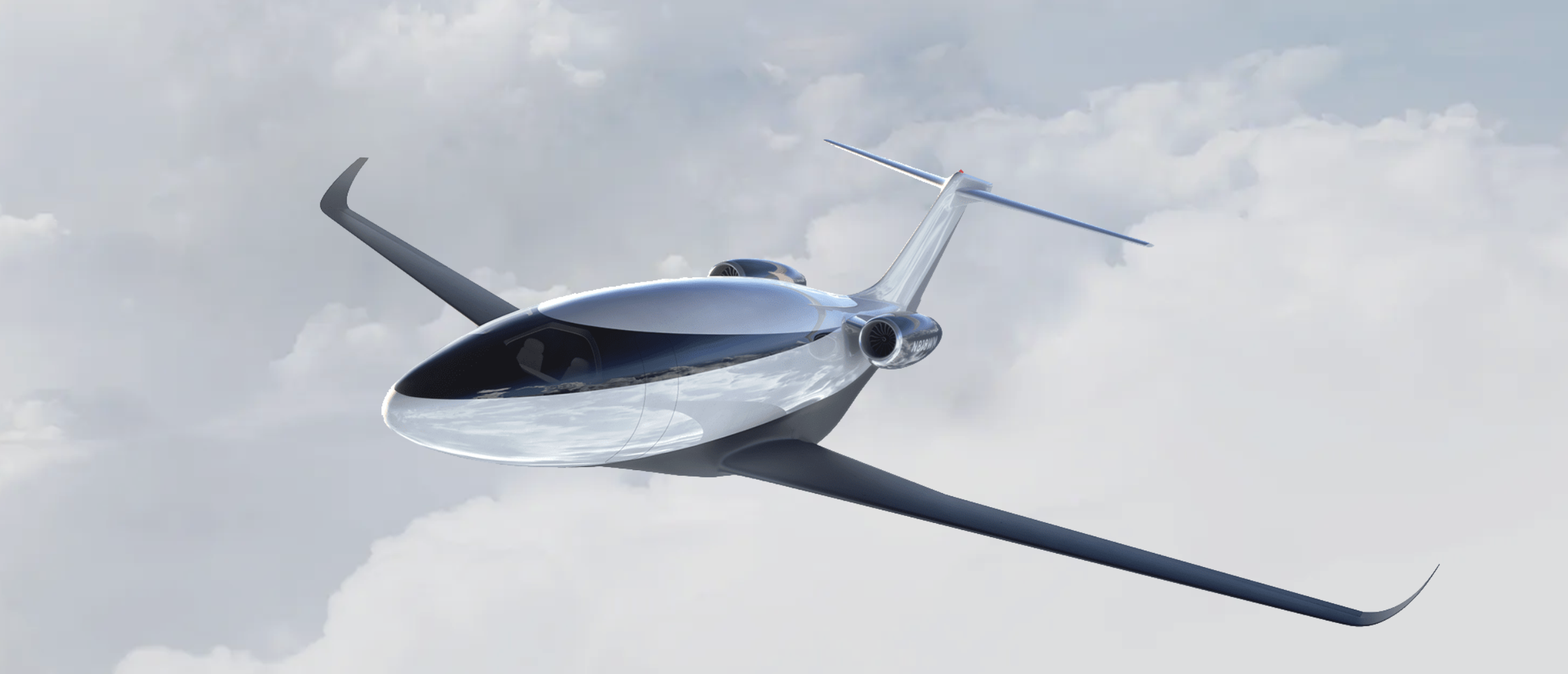
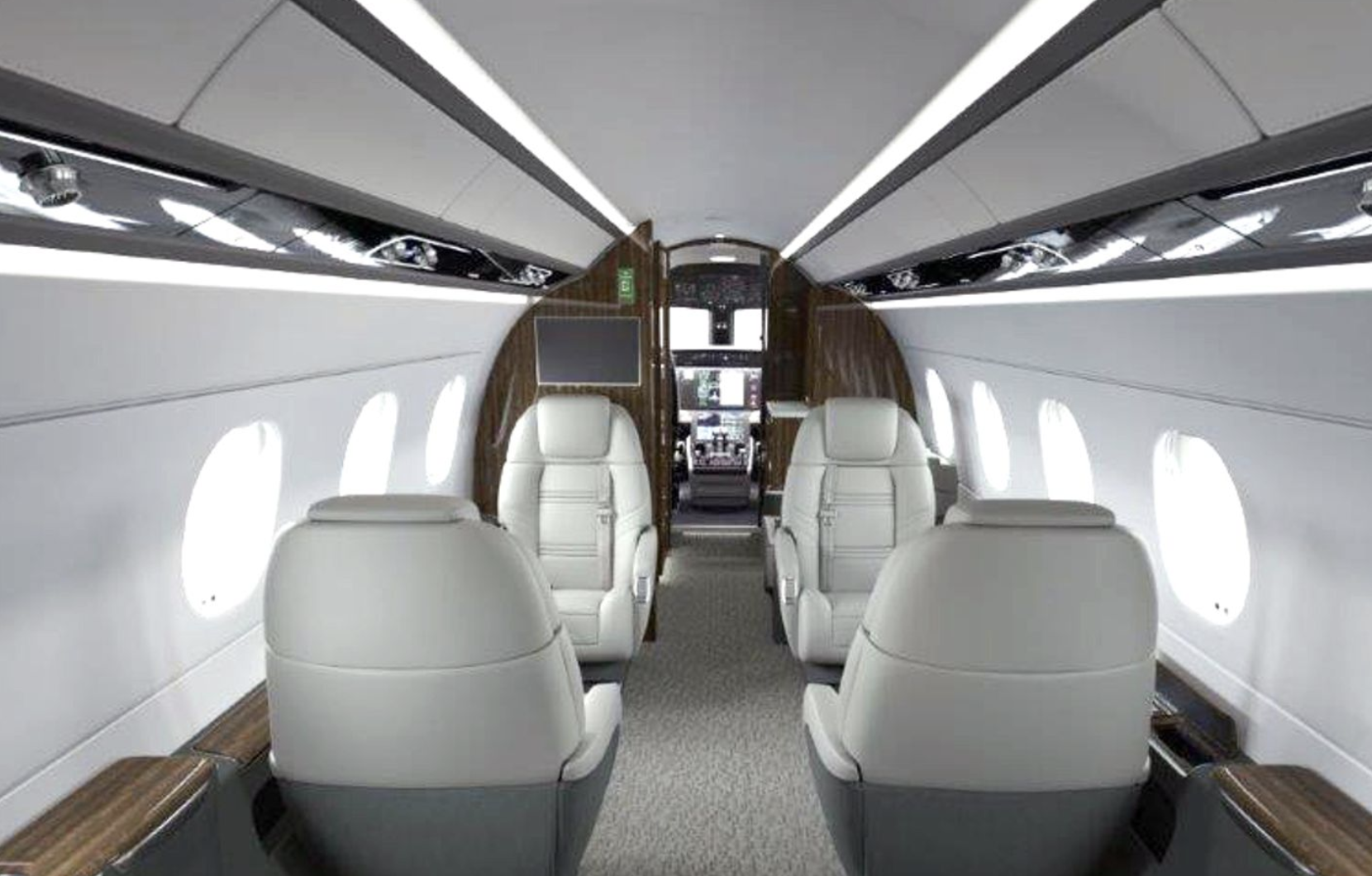
Otto Aerospace has completed the Preliminary Design Review for its Phantom 3500.
Last September, Flexjet signed a deal for up to 300 of the clean-sheet private jet.
The manufacturer calls it “a major technical milestone that advances the clean-sheet business jet program from conceptual design into detailed design and production planning.”
The review was conducted at Otto Aerospace’s future home in Jacksonville, Florida.
The Preliminary Design Review provided a comprehensive assessment.
The review covered configuration, architecture, performance, and overall design maturity across systems and structures.
Otto Aerospace has now frozen the aircraft’s aerodynamic design and major interfaces.
The move gives engineering and supplier teams the definition needed to support the next phase of work.
President and CEO Scott Drennan says, “This is an important step for our team.”
He adds, “Engineers often feel like PDR is a test, but I look at it as a celebration of their amazing work.”
Drennan continues, “And, yes, they passed the test with flying colors.”
Next Steps
Looking ahead, Drennan says:
‘The Phantom 3500 has crossed the threshold from a promising concept to an aircraft we are preparing to build and fly. You can see it in the digital model, in the hardware we have built, and in the maturity of the program. The work now is execution. We are focused on building this aircraft on time, while proving that our laminar-flow aircraft can do exactly what we said it would do.’
Otto now advances the program into detailed design and engineering release.
That sets the stage for hardware fabrication and assembly.
Otto expects the first flight of Flight Test Vehicle 1 in 2027.
The flight-test program will support the OEM’s broader effort to demonstrate the producibility and performance of its applied laminar-flow technology.
The laminar-flow technology is engineered “to reduce the energy required for flight and form the foundation for a new category of highly efficient and sustainable aviation.”
Chief Technology Officer Kyle Heironimus says, “Aircraft development depends on thousands of decisions made with speed, quality, safety, and certification rigor in mind.”
He adds, “I’m proud of how this team worked together to reach this milestone and put the Phantom 3500 in position for the next phase of execution.”
The program now moves from PDR toward Critical Design Review and aircraft build.
In making the order, Flexjet, Inc. Chairman Kenn Ricci said, “The Phantom 3500 exemplifies that approach perfectly, marking a bold step into a future where an aircraft’s efficiency and sustainability stand alongside speed, comfort, and range as defining standards.”