In a filing with the SEC earlier today, Honeywell said it is negotiating with Flexjet to settle pending litigation.
The litigation stems from a lawsuit filed by Flexjet regarding an engine maintenance services agreement.
That agreement called for Honeywell to service engines on key aircraft in its fleet.
Per the filing, Honeywell “expects that any comprehensive settlements will include one-time cash payments to the parties to the Flexjet-related litigation matters totaling approximately $470 million in the aggregate.”
Reuters first reported news of the filing.
In a statement to Private Jet Card Comparisons, a spokesperson for Flexjet says:
‘As disclosed in Honeywell’s 8‑K filed earlier today, we are actively engaged in ongoing negotiations in pursuit of an agreement that is comprehensive, and in alignment with the terms agreed upon and upheld via litigation of the original Master Services Agreement (MSA). Honeywell’s $470 million disclosure is an accounting recognition, not the result of a finalized agreement to have a value to Flexjet of in excess of $1 billion. While discussions remain ongoing, we are encouraged by Honeywell’s public acknowledgment of the significance of this matter. Our continued focus is on achieving a resolution that strengthens accountability and reinforces the importance of service reliability for the aviation industry at large.’
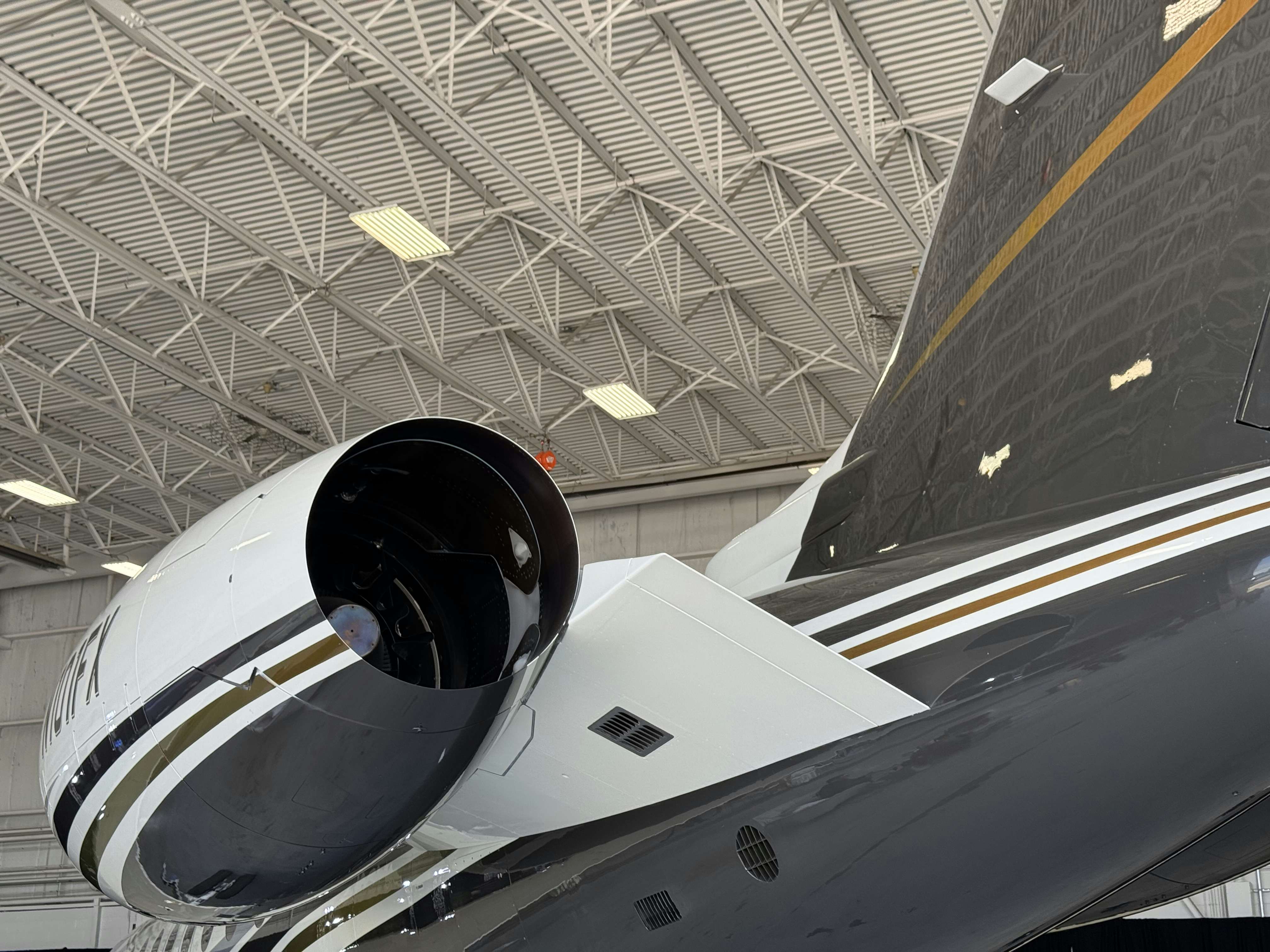
Honeywell produces the engines powering Flexjet’s Challenger 300, Praetor 500, and Praetor 600 private jet fleets.
Honeywell wrote in its SEC filing:
‘The company is in ongoing settlement negotiations with Flexjet and the other parties to the litigation matters. Based on negotiations to date, the company expects to record a one-time charge within its Aerospace Technologies segment in the fourth quarter of 2025 that will reduce GAAP sales (due to contra-revenue accounting) and operating income by approximately $310 million and $370 million, respectively. The company further expects that any comprehensive settlements will include one-time cash payments to the parties to the Flexjet-related litigation matters totaling approximately $470 million in the aggregate. The foregoing expected financial impacts are subject to change based on the final terms of any such settlements with Flexjet and such other parties, and there can be no assurance that any such settlements will be reached.’
Flexjet said Honeywell’s failure to repair engines promptly or provide replacement engines caused a large number of its fleet to be grounded.
At some points, more than one-third of its aircraft with Honeywell engines were unavailable.
Flexjet Chairman Kenn Ricci said in an interview earlier this year, “At the peak – December of 2024 and January 2025 – there were 91 engines off-wing supported by a small percentage of rental engines for a net impact of nearly 40 aircraft parked. At that time, some engines had been out of service for nearly three years.”
‘Don’t Care’
Reports about the litigation have drawn heavy criticism of Honeywell.
An AI analysis of nearly 60 social media comments found them “strongly anti-Honeywell.”
One poster wrote, “Honeywell doesn’t care to support any of their products that aren’t defense.”
Another posted, “When you have a stranglehold on the super midsize market, it seems you don’t have to give a rip about customer service. Just more customers waiting on parts, and they don’t care. Let’s hope this lights even the smallest fire under them.”
A third poster added, “They are so worried about the bottom line. This is what happens. They deserve it.”
Yet another post wrote in part, “I understand supply chain issues, but by now the world is past that… now it just looks like poor management.”
Poor Support
During the Corporate Jet Investor conference in Miami, Nicholas Air CEO Nicholas Correnti put OEMs and MROs on blast.
“I don’t think there’s a supply chain issue… We’re producing airplanes at a staggering rate, and the backlogs are 18 months, two years, depending on the OEM,” Correnti noted, before adding, “All those airplanes being produced and sold off the assembly lines have to have the parts that the current aircraft that are in circulation need.”
Part of the Flexjet litigation found that Honeywell prioritized new aircraft deliveries over supporting existing customers.
Correnti told the audience that the revenue loss of having airplanes grounded for months at a time will be too much for smaller operators.
He continued, “Who I feel sorry for is the one, two, three airplane operations, or the young entrepreneur… They’re not going to make it. They are going to fail.”
Correnti compared it to buying a new luxury car.
After driving it off the lot, your new car breaks down and is towed back to the dealership.
The dealership service center tells the customer they know the problem, but there is an eight-month wait for the component.
Also, no loaners are available.
At the same time, you see more of the car types you just bought being offloaded onto the lot.
When you ask why they can’t take the part from one of those cars or loan you one, you are told they are committed to new customers.
Yet the car owner still has to make their payments on the car they can’t drive.