Wheels Up posted 44% and 30% year-over-year improvements in Adjusted EBITDAR and EBITDA, cutting losses despite an 11% year-over-year revenue decline in its Q3 financial results.
Adjusted EBITDAR was negative $13.2 million and Adjusted EBITDA was negative $18.9 million, while revenue fell to $164.8 million.
Three percent of the revenue decline was attributed to the sale of non-core businesses in 2025.
Total Gross Bookings were $225.4 million, down 15% year over year.
The metric measures total gross spend on private jet flight services, including private jet charter, group charter and cargo services.
The company said the drop reflected “lower group charter, cargo and on-demand charter volume.”
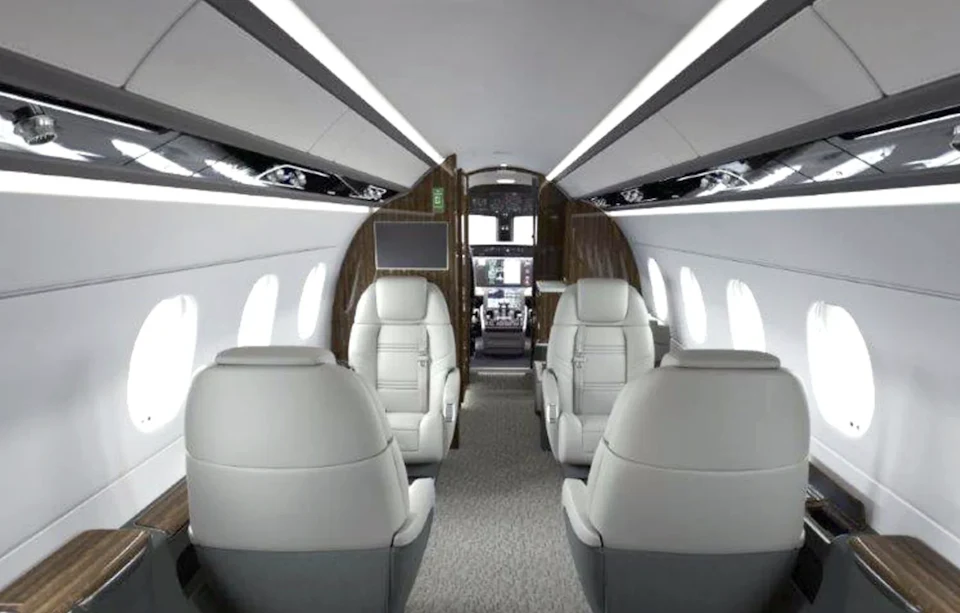
However, the numbers masked positive growth from Phenom 300 and Challenger 300 fleet revenue, which increased by 120%, outpacing 79% growth in those fleet types.
You can download the full 10-Q at the end of this article.
Delta commitment
Delta Air Lines, which owns 38% of Wheels Up, committed to an additional $100 million revolving credit facility.
Earlier today, Wheels Up announced a definitive agreement with Embraer to add six new Phenom 300Es to the fleet in the second half of 2027.
Wheels Up achieved a Completion Rate of 99.3% and On-Time Performance (A-30), or arrival within 30 minutes of the scheduled time, of 86.4% (up nearly four points year over year).
Through the end of September 2026, the company had recorded 163 Brand Days, or days with a perfect completion rate and no operational cancellations.
CEO George Mattson said that with the fleet transition from legacy aircraft completed 18 months ahead of schedule, performance and reliability improved, and integration with Delta increased, the pieces are now in place for continued financial improvement.
Mattson says, “The third quarter marked an important inflection point for Wheels Up as the strategic actions we took earlier this year began to translate into stronger commercial and operational performance.”
Wheels Up membership
Its Signature membership, introduced in 2025, is also taking off, reaching 1,500 members.
About 1,000 are members transitioning from its legacy programs, while many new members are former clients who left the company.
“Signature revenue and memberships surpassed legacy revenue and memberships for the first time, demand for our premium fleet continued to scale, Adjusted Contribution Margin improved significantly despite transitory headwinds from the wind-down of legacy programs, and we delivered improvement across all operational performance metrics,” Matson said.
He continued, “As we look ahead to 2027, we are focused on completing the full sunset of legacy membership programs and continuing to scale the Wheels Up Signature Membership, expanding high-quality revenue, improving productivity, maximizing the value driven by our premium fleet, and deepening our strategic partnership with Delta Air Lines to support long-term profitable growth.”
In a letter to investors, Mattson updated cost-containment measures, saying future earnings will benefit from $70 million in cost cuts now implemented.
“While a portion of the savings that we originally expected from such actions are reflected in our results for the three and nine months ended September 30, 2026, we anticipate that the full impact of the anticipated cost savings and control actions will be reflected in our financial results by the end of 2026 relative to a second quarter of 2025 baseline.”
Q3 2026 Financials
Non-GAAP Total Gross Bookings declined from $266.6 million in Q3 2025 to $225.3 million this year.
GAAP revenue also fell from $183.8 million to $164.8 million.
Gross profit was $15.2 million compared to a $1.3 million loss a year ago.
Adjusted Contribution was $27.0 million, up from $23.5 million despite the sale of non-core businesses and “ongoing business transformation.”
Net Loss increased to $89.4 million from $83.7 million.
Mattson says the loss is “primarily attributable to temporary inefficiencies associated with the legacy fleet retirements as well as higher interest expense as we continued investing in our premium fleet and utilized financing to solidify the impact of our transformation strategy.”
Wheels Up Quarterly financials (Last 7 quarters)
| (in millions) |
Q1-2025 |
Q2-2025 |
Q3-2025 |
Q4-2025 |
Q1-2026 |
Q2-2026 |
Q3-2026 |
| TTL Gross Bookings $ |
241.9 |
261.9 |
266.6 |
269.0 |
267.2 |
241.8 |
225.3 |
| Fund Sales $ |
133.0 |
127.0 |
127.0 |
188.0 |
91.8 |
99.5 |
100.0 |
| GAAP Revenue $ |
177.5 |
189.6 |
185.4 |
183.8 |
168.9 |
182.0 |
164.8 |
| Gross profit (Loss) $ |
(1.1) |
2.2 |
(1.3) |
12.8 |
(1.9) |
9.6 |
15.2 |
| Adjusted Contribution $ |
22.4 |
23.7 |
23.5 |
35.0 |
14.8 |
22.5 |
27.0 |
| Adjusted Contribution Margin |
12.6% |
12.2% |
12.7% |
19.1% |
8.7% |
12.4% |
16.4% |
| Net Loss $ |
(99.3) |
(82.3) |
(83.7) |
(28.9) |
(82.9) |
(107.2) |
(89.4) |
| Adjusted EBITDA $ |
(30.7) |
(31.2) |
(26.9) |
(6.3) |
(30.6) |
(26.2) |
(18.9) |
| Adjusted EBITDAR $ |
(25.3) |
(27.3) |
(23.4) |
(2.3) |
(20.8) |
(19.9) |
(13.2) |
Source: Wheels Up
Adjusted EBITDA stayed in the red at $18.9 million, still an improvement from $26.9 million in 2025 Q3.
Adjusted EBITDAR was negative $13.2 million, better than the $23.4 million negative result in 2025.
On the gains, Mattson said, “We are beginning to realize the benefits of a more favorable revenue mix and stronger unit economics as Signature adoption continues to accelerate and remaining legacy memberships convert or expire.”
Mattson also touted improvement in contribution margin. “Year-over-year margin growth is being achieved despite ongoing transitory headwinds associated with exiting our legacy fleets and program while scaling our premium fleets.”
YTD 2026 vs. 2025
Total Gross Bookings year-to-date dropped from $770.5 million to $734.5 million.
Sales of prepaid jet cards – Fund Sales – were $291.3 million, down from $387.0 million, with Signature membership hitting the century mark in the latest quarter.
GAAP revenue fell $37 million to $515.7 million for the first nine months of 2026.
Gross Profit fell to $22.6 million for the first three quarters, and Adjusted Contribution fell slightly from $69.0 million to $64.4 million.
Wheels Up Full Year/year-to-date (2018 to 2026)
| (in millions) |
FY 2018 |
FY 2019 |
FY 2020 |
FY 2021 |
FY 2022 |
FY 2023 |
FY 2024 |
FY 2025 |
YTD 2025 |
YTD 2026 |
| Total Gross Bookings $ |
|
|
|
|
|
|
1,043.8 |
1,039.5 |
770.5 |
734.5 |
| Fund Sales $ |
|
|
530.0 |
897.0 |
1,005.0 |
482.0 |
596.0 |
575.0 |
387.0 |
291.3 |
| GAAP Revenue $ |
332.0 |
385.0 |
695.0 |
1,194.3 |
1,579.8 |
1,253.3 |
792.1 |
736.5 |
552.7 |
515.7 |
| Gross Profit (Loss) $ |
14.0 |
5.0 |
1.7 |
22.4 |
(26.5) |
(37.7) |
2.5 |
12.6 |
(0.2) |
22.6 |
| Adjusted Contribution $ |
49.0 |
44.0 |
62.4 |
82.2 |
57.9 |
62.5 |
85.7 |
104.1 |
69.0 |
64.4 |
| Adjusted Contribution Margin % |
14.7% |
11.5% |
9.0% |
6.9% |
3.7% |
5.0% |
10.8% |
14.1% |
12.5% |
12.5% |
| Net Loss $ |
(83.0) |
(107.0) |
(85.4) |
(197.2) |
(555.5) |
(487.4) |
(339.6) |
(294.2) |
(265.3) |
(279.6) |
| Adjusted EBITDA $ |
(14.0) |
(21.0) |
(52.4) |
(87.4) |
(185.3) |
(145.9) |
(119.2) |
(95.1) |
(88.8) |
(75.6) |
| Adjusted EBITDAR $ |
|
|
|
|
|
|
(85.9) |
(78.3) |
(75.9) |
(53.9) |
Source: Wheels Up
Adjusted Contribution Margin was flat at 12.5% compared to a year ago.
Net Loss increased from $265.3 million to $279.6 million.
Adjusted EBITDA loss was cut to $75.6 million from $88.8 million.
Adjusted EBITDAR stayed in the red, but improved to negative $53.9 million from negative $75.9 million.
Cash and cash equivalents dropped from $133.9 million at the end of 2025 to $51.8 million at the end of the quarter.
Deferred Revenue, mainly prepaid jet card sales, dropped from $738.9 million at the end of 2025 to $595.2 million at the end of Q3 2026.
READ: Wheels Up restates non-GAAP financial results from Q1 2024
Looking Ahead
Wheels Up ended the quarter with 1,507 Signature members and 807 legacy members, combined, 2,314 members, a shadow of the heady days when Wheels Up had over 10,000 members.
However, Signature members must put down at least $200,000 in funds, unlike the previous program, which offered pay-as-you-go and $100,000 tiers.
What’s more, Mattson says former members are returning, and Signature has the biggest cohort of new members, while corporate bookings were up 38%.
The mishmash of aircraft from five operator acquisitions is also gone.
Mattson told investors, “While temporary transition-related costs continue to affect reported results, the underlying trends in our premium fleet and membership business reinforce our confidence in the long-term earnings potential of Wheels Up.”
Speaking to Private Jet Card Comparisons, Mattson says that with the fleet transformation complete, continued strong operational performance, and the full integration of Air Partner, Wheels Up will be able to tap more effectively into the Delta relationship.
He says Wheels Up will have more exposure to Delta customers, both digitally and in premium spaces such as its Delta One lounges.
Importantly, he says, there will be even deeper joint efforts with Delta to tap into its tens of thousands of corporate accounts, where the Delta relationship keeps the door open to what Mattson calls “long-cycle customer opportunities.”
Adding to the optimism, Mattson says private aviation remains “relatively underpenetrated among people who can theoretically afford to fly privately. We’re still early in the adoption cycle for private aviation in general.”
DOWNLOAD: Wheels Up Q3 2026 Financials