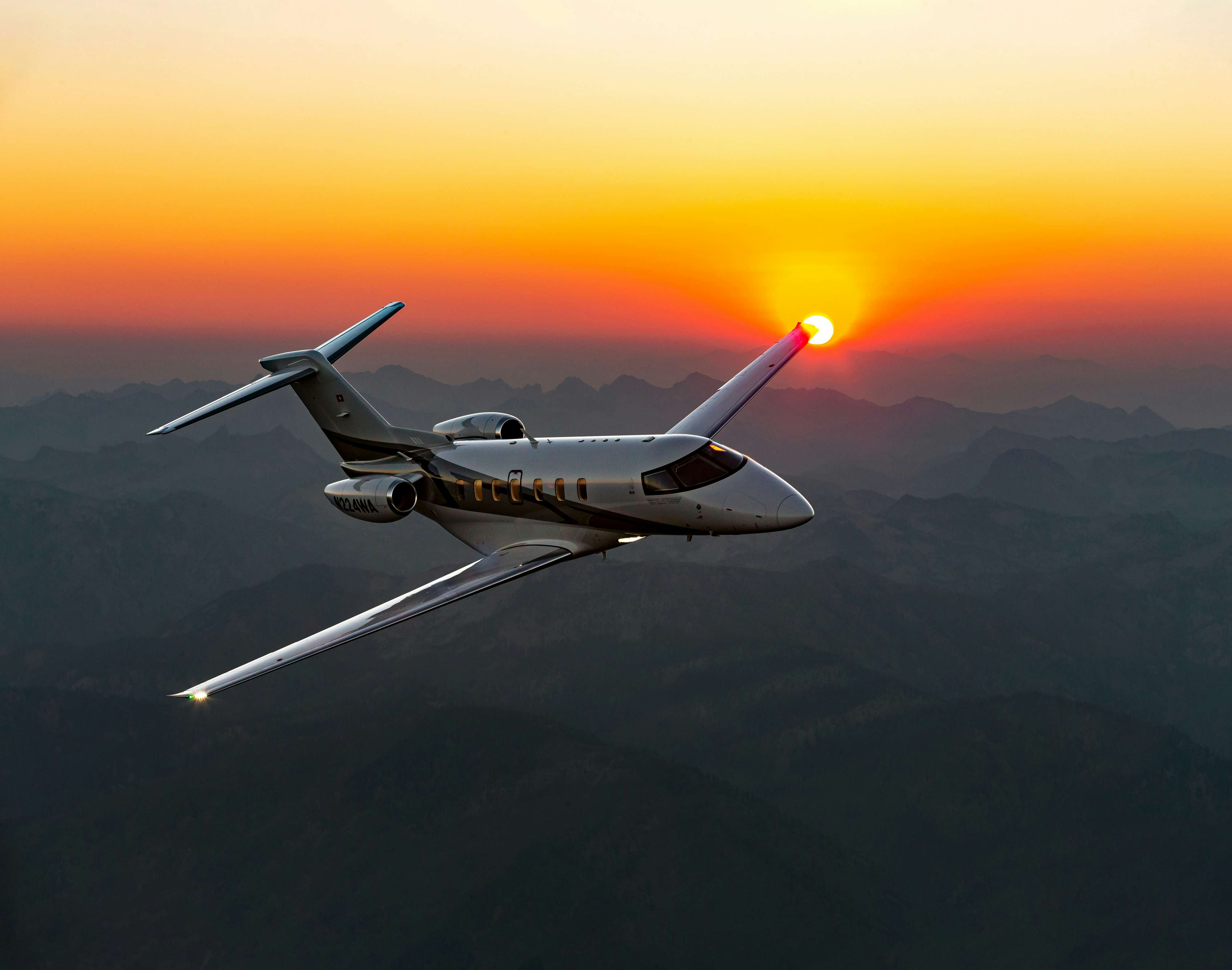
Pilatus Aircraft is a popular fixed-wing aircraft manufacturer that can be traced back to the late 1930s. The company has grown into a prominent aerospace company, mostly due to its introduction of the PC-12. This aircraft was a revolutionary turboprop-powered civilian aircraft that solidified Pilatus as a private aircraft company. Recently, the company also introduced its first private jet, the PC-24.
Pilatus was initially founded in 1939 in Swans, Switzerland, as Pilatus Flugzeugwerke AG. The company was initially founded to build Spitfire aircraft for the Swiss Air Force. However, after an initial contract fell through, Pilatus pivoted to developing new clean-sheet aircraft for the Swiss Air Force.
In the 1940s, Pilatus offered its first aircraft, the P-1, to the Swiss Air Force. However, the company eventually switched to producing the SB-2 Pelican in the 1940s. Pilatus continued to develop experimental prototypes through the 1940s, although none were chosen to be built by the Swiss Air Force.
Pilatus eventually broke into the industry with the introduction of the P-6 Porter in the late 1950s. After initial feedback, Pilatus also introduced the PC-6 Turbo as an upgraded variant. Through the 1960s, Pilatus continued producing the PC-6. It also briefly flew the PC-7, a turboprop-powered variant of the earlier produced PC-3. However, after it crashed, the project was put on hold until the 1970s.
Additionally, in the 1970s, Pilatus purchased the rights for a glider known as the B-4. Pilatus redesigned the aircraft and designated it as the PC-11, producing over 300 total aircraft. Pilatus also restarted production of the PC-7, becoming a profitable aircraft for the company.
In the 1980s, Pilatus introduced an improved variant of the PC-7 called the PC-9. 1987 was also an important year for the company, as it is when it began the development of the popular PC-12 turboprop aircraft. This aircraft was officially unveiled in 1989 at the annual National Business Aviation Association (NBAA) convention.
The 1990s brought the first flight of the PC-12 in 1991 and the eventual certification of the aircraft in 1994. This aircraft would go on to become a popular and versatile aircraft, as it has been used for business use, military operations, and in the cargo industry.
In 2000, Pilatus was sold to a consortium of Swiss investors by its previous owner, Unaxis. Additionally, Pilatus furthered its family of military trainers with the development of the PC-21 in 2002. To round off the decade, Pilatus delivered its 1,000th PC-12.
In the 2010s, Pilatus began developing a private jet based on feedback from PC-12 operators. Owners wanted an aircraft with increased range and speed, but also to retain its takeoff and landing ability. This led to Pilatus developing the PC-24, which was officially certified in the late 2010s.
Since the introduction of the PC-24, Pilatus has retained a significant hold in the private aviation industry, seeing success with the PC-24 and also the PC-12, which is frequently used by business operators.

Today, Pilatus produces several popular private aviation offerings:
| Aircraft Model | Entry into Service | Aircraft Class | Engines | Capacity | Range |
| Pilatus PC-12 PRO | 2025 | Turboprop | Pratt & Whitney Canada PT6E | 9 passengers | 1,803 nautical miles |
| Pilatus PC-24 | 2018 | Light jet | Williams International FJ44 | 10 passengers | 2,040 nautical miles |
The PC-12 PRO is the latest aircraft in the Pilatus PC-12 series, one of the world’s most popular turboprop offerings. Earlier variants of this aircraft can be traced back to the initial PC-12 variant that was introduced in 1994.
Additionally, Pilatus introduced its only business jet offering, the PC-24, in the late 2010s. This aircraft became immediately popular in the light private jet offering due to its impressive range and takeoff and landing performance.
Pilatus also currently produces the PC-21, which is an advanced military trainer similar to the PC-12. Beyond this, Pilatus is currently working to certify the PC-7 MKX, a next-generation military trainer.
Pilatus first began developing its own aircraft in the 1940s. Initially, the aircraft manufacturer began by developing several prototype aircraft, including the SB-2 Pelican and the P-1. Throughout the 1940s and the 1950s, Pilatus developed several trainer aircraft, including:
Pilatus eventually broke into the civil aircraft industry with the introduction of the PC-6 Porter in 1959. The company introduced another variant, the PC-6 Turbo Porter, in this series in 1969, with over 500 produced.
The company built on this success with the development of the PC-7 in 1966. This basic military trainer was also a turboprop-powered aircraft.
In the 1980s, Pilatus continued expanding its offerings for military trainers, introducing the PC-9. This advanced turboprop trainer was produced from 1984 to 2018.
Pilatus saw a decline in sales in the 1990s. However, in 1994, Pilatus introduced the PC-12, a single-engine turboprop aircraft. The PC-12 was utilized for business and civil operations and is widely regarded as one of the best turboprops on the market. Currently, Pilatus still produces an upgraded variant in this series.
Currently, Pilatus is a privately held company based in Stans, Switzerland.
| Founded | 1939 (as Pilatus Flugzeugwerke AG) |
| Headquarters | Stans, Canton Midwalden, Switzerland |
| Manufacturing Locations | – Stans, Switzerland
– Broomfield, Colorado – Adelaide, Australia – Seville, Spain |
| Company Type | Private Corporation |
| Approximate Employees | 3,000 (2024) |
| 2024 Revenue | $1.8 billion USD |
| 2024 Net Income | $270 million USD |
Pilatus has grown to a dominant force in the private aviation industry. Several operators have found success with its turboprop platform, the PC-12. Several other private jet providers also utilize the Pilatus business jet offering, the PC-24. This includes the following private aviation companies: