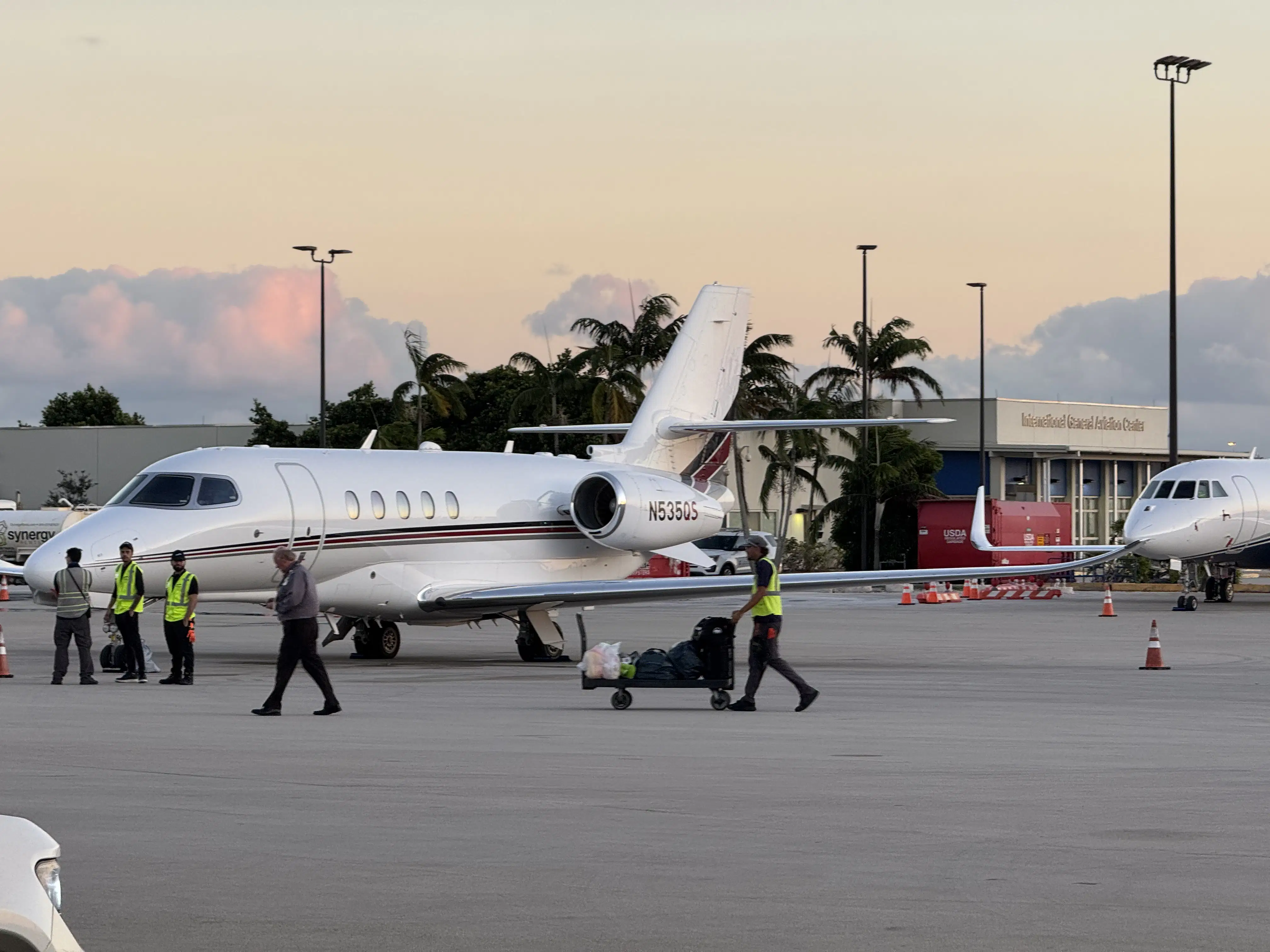
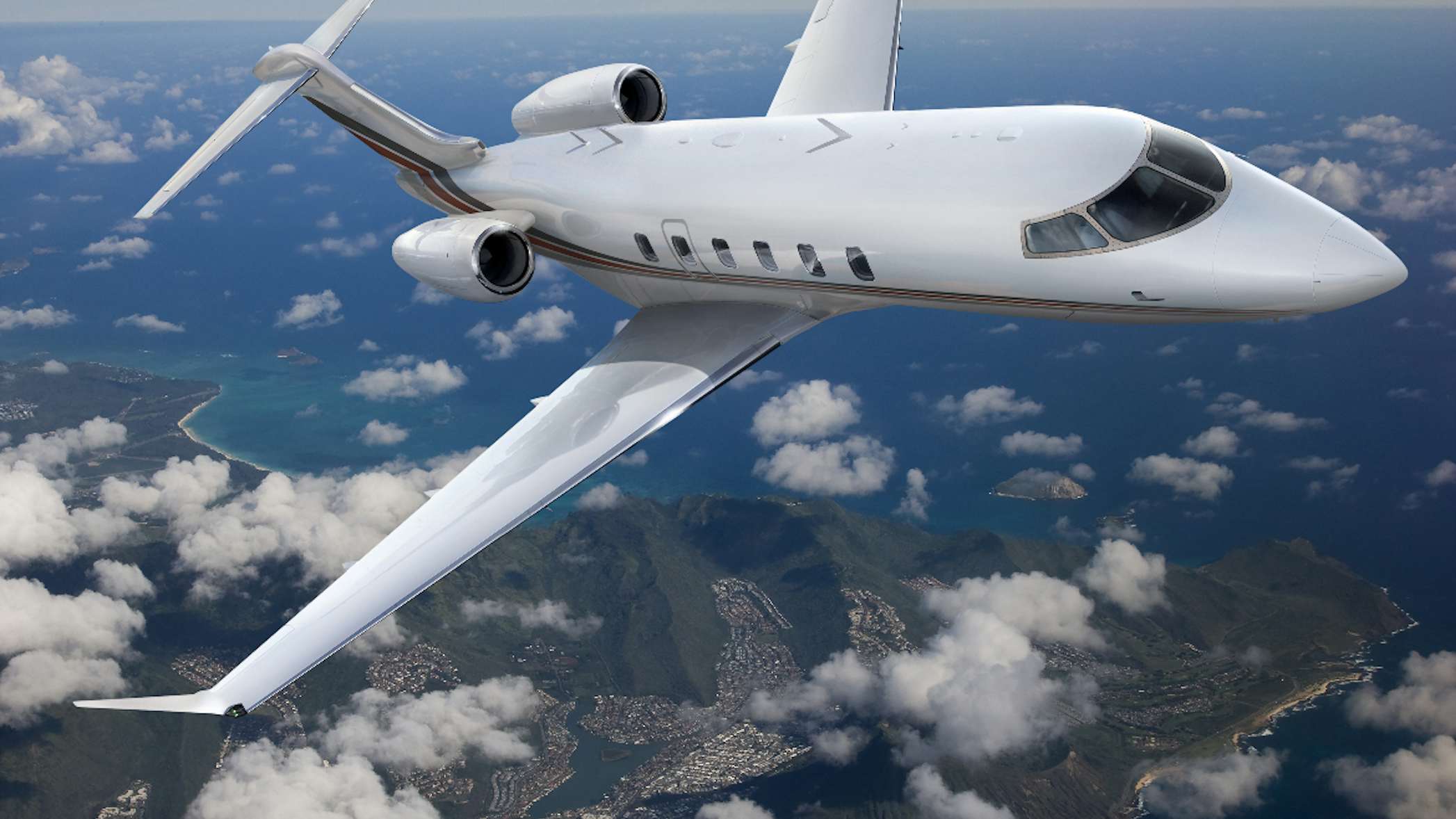
The top executives at Berkshire Hathaway and NetJets said this morning that demand for private aviation has not let up so far this year, and the outlook is robust.
That’s despite short-term concerns about fuel shortages in Europe and having enough infrastructure to support future growth.
NetJets is the world’s biggest private jet company.
One of its jets takes flight every 57 seconds.
Berkshire Hathaway CEO Greg Abel and NetJets Chairman & CEO Adam Johnson spoke with CNBC ahead of the parent company’s annual meeting tomorrow in Omaha, Nebraska.
Following Warren Buffett’s retirement as Berkshire Hathaway CEO and the elevation of Abel, Johnson added the role of president of consumer products at the parent company to his role at NetJets.
Buffett announced his plans to step down at last year’s Berkshire Hathaway annual meeting.
Current Demand
Johnson told CNBC host Becky Quick that, so far, the company has not seen any demand impact from the increase in fuel prices.
The fuel component is a significant part of the hourly price that fractional owners pay and is calculated monthly.
However, the fuel variable is a relatively small component of the fully loaded hourly rate, given the monthly management fee owners pay regardless of whether they fly.
It becomes an even smaller portion of the cost when considering the acquisition cost for the share, which they already paid.
Either way, the executives said demand for private aviation remains robust.
Johnson said that, between its fractional ownership and aircraft management at Executive Jet Management, NetJets’ current fleet is 1,104 airplanes.
The company previously said it expects to take delivery of 100 new private jets this year.
During the interview, Abel added, “We’ll see that similar level next year.”
In terms of current demand, Johnson said NetJets will operate over 700 flights this weekend just for the Kentucky Derby, Formula 1 in Miami, and the Berkshire Hathaway meeting.
Demand this weekend will match the Masters, traditionally NetJets busiest weekend, the executives said.
Abel noted NetJets operated a record 140 flights to and from the Masters on the Friday of the final weekend.
READ: A NetJets 2025 Recap
Infrastructure Investment
One concern for the industry is the lack of ramp space at busy airports.
Johnson said investments in future infrastructure being made over the past decade will pay off in terms of access for NetJets and its customers.
“Infrastructure is big in my space, in airport availability, and they’re not building new airports,” Johnson told Quick.
He added, “So we’re laying down infrastructure to make sure there’s parking space, FBO space (for our customers).”
NetJets recently completed a ramp phase of a dedicated private terminal at Augusta Regional Airport.
Johnson said of the 3,100 airports NetJets flies to, Augusta is in the top 150.
Executives have previously said the new Augusta infrastructure will also support flying at nearby constrained airports in Charlotte and Atlanta.
Johnson also pointed out Teterboro Airport across the Hudson River from Manhattan and Palm Beach International Airport.
The two airports, among the busiest in the U.S., account for 10% of all NetJets flights, Johnson said.
Johnson told Quick that NetJets has 16 acres at Teterboro that it can use to support future demand.
NetJets has been consistently adding private terminals in key locations, with more on the way.
Finally, Quick said Johnson is comfortable that it has secured fuel supply for the busy summer in Europe despite reports of possible shortages.
Johnson will make his first appearance on the dais at the Berkshire Hathaway AGM tomorrow.