February 26, 2026
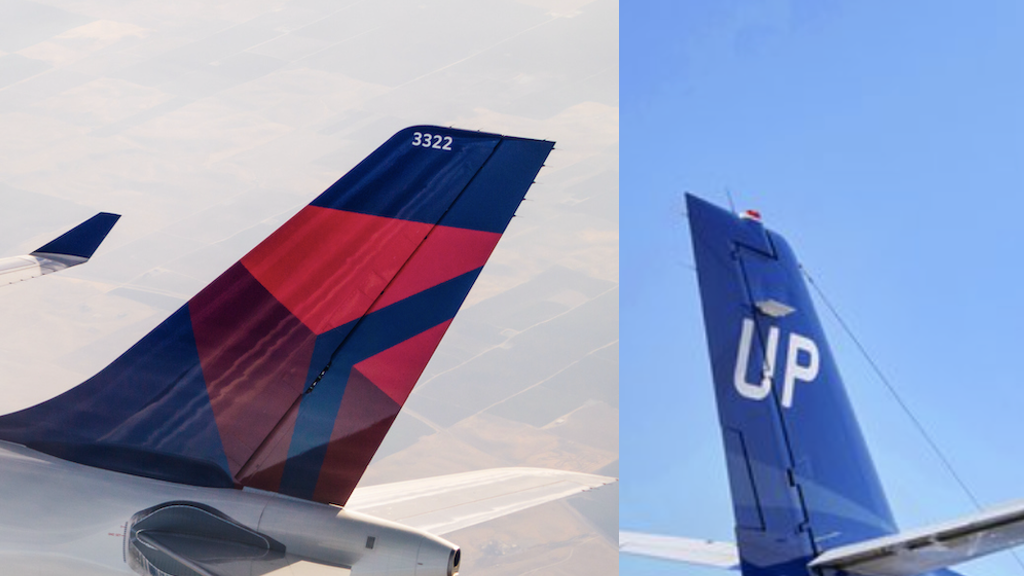
CEO George Mattson told attendees at Corporate Jet Investor that a complex fleet transition is masking progress of Wheels Up’s turnaround.

Wheels Up is making financial and operational progress despite a complicated transition from five aircraft types to two.
That’s according to a review of the Delta Air Lines-backed provider by CEO George Mattson during Corporate Jet Investor in Miami.
He said financial progress is set to increase significantly as it completes its fleet transition.
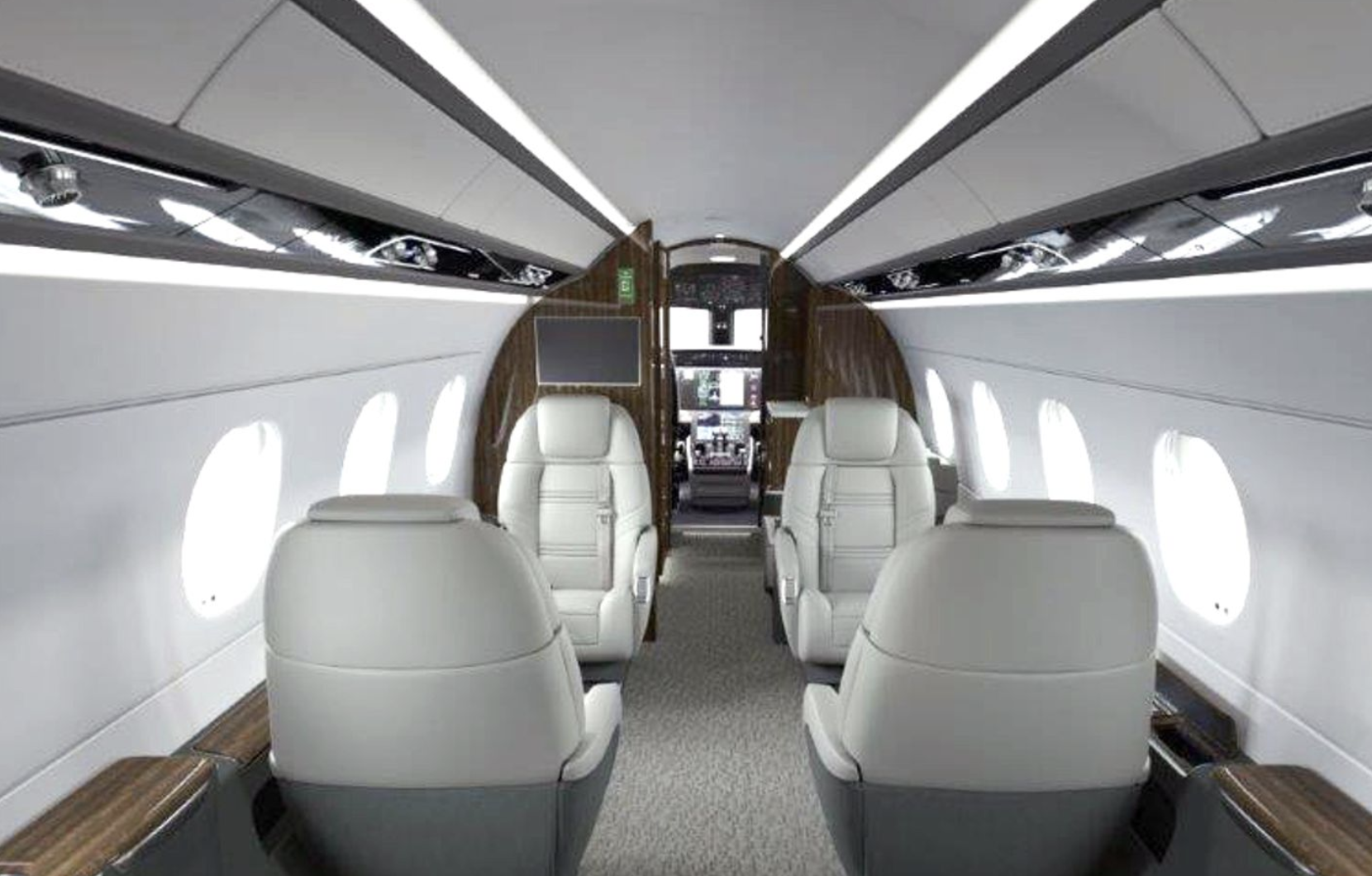
The new types – Phenom 300s and Challenger 300s – also align the company with what Delta’s corporate customers want.
While the super midsize Challengers are a premium replacement for the Citation Xs, the Embraer light jets replace three types.
When the completion is done, they will take the place of the Hawker 400XPs.
The last of its CJ3 light jets and Citation Excel/XLS midsize jets have been retired from the fleet.
Mattson told the conference, “We’re in the midst of a very complex transition. We’re scaling down a set of legacy fleets. We’re building up a set of next-generation fleets. And right now, we’re managing a lot of fleets that are not at optimal scale.”
He continued, “And so having said that, we also had our best operating performance quarter of our of our transition of our transformation in the last couple of years.”
Mattson, a longtime Delta board member, was appointed CEO of Wheels Up in September 2023 after the airline led a $500 million rescue package.
Speaking about its Q3 results, Mattson said, “We think there’s probably four percentage points of margin noise in some of those transitional costs. We feel very good about the progress.”
READ: Wheels Up Q3 Financials Recap
In terms of cutting losses, Mattson said, “The other thing we feel good about is that in the quarter, we had set out a goal to find $50 million of efficiency and productivity, and we’ve exceeded that. We think that number is going to be more like $70 million plus.”
Looking ahead, Mattson said, “We think the fourth quarter is going to be our best quarter since we got started here. We’re starting to see the flywheel turn. Right now, as of the end of the third quarter, 30% of our fleet is the new generation, next-generation aircraft. By the end of this quarter, that number becomes 50%. By the end of next year, that number becomes 80% plus.”
Mattson continued, “As we see the unit economics and operational efficiency of (the Phenoms and Challengers) being a larger proportion of the total, you have an acceleration effect that we are seeing, and we expect to see in the fourth quarter and into 2026.”
Mattson said in two short years, Wheels Up has moved to a 50/50 revenue split between memberships and ad hoc charter flights from being virtually solely reliant on memberships flying.
Tapping into Delta’s sales network is still just scratching the surface.
Mattson noted:
‘Delta has roughly 45,000 corporate customers, about a thousand salespeople covering these customers, and our sales team and their sales team are going together to these customers through the front door with the Delta agreement in hand. Delta is often their largest aviation provider, and saying we want to add Wheels Up to this as an extension of what we’re doing at Delta and providing incentives to customers to see that happen.’
Wheels Up has also moved from a nearly 90% leisure split to 50/50 with corporate in Q3, per Mattson.
He expects its recently launched Signature membership to play a key role in gaining more business volume.
“We only now in my opinion with the launch of the Signature membership and the new fleet have a product that really is in the sweet spot of what the corporate aviation department is flying or wants to fly and that it really opens the door really is the starting point for I think a really strong performance we’re expecting out of that segment going forward,” Mattson said.
Asked about future growth, Mattson said the top goal is to complete the current transformation; however, he didn’t rule out major moves.
“You know the next stage could be, you know, expansion into other geographies with a programmatic fleet offering. It could be an obvious expansion into larger cabin offerings,” he said.
The CEO was asked by an audience member, “What threshold of further losses might prompt Delta to pull back?”
He countered that while the current financials are a “waypoint,” that snapshot doesn’t speak to the broader picture.
Mattson said, “When you look at how (Delta and Wheels Up are) going to market together, when you look at how this has been integrated into their core strategy – Delta’s strategy centers around being the premium commercial airline. (Delta management) views Wheels Up as an extension of what premium means. And we’re introducing this to all their customers. And so, the question I would ask back is, ‘What would you need to want to walk that back with all your important customers?’ And the answer is, ‘(Delta management would have) to have a very different view than everybody has today.’”
In terms of getting to profits, Mattson said:
‘Things can flip quicker than you think. The unit economics of what we’ve been doing and the unit economics of what we’re going to be doing aren’t incrementally percentage points better. They’re multiples better. When you look at the gross profit per aircraft of what we are now flying versus what we were flying, it’s multiples. There are huge opportunities here to change the face of that P&L. When you run an airline operation, as everybody who’s in this room knows, it’s a tremendously high fixed cost business. But the flip side of that is when you begin to cover those costs, and you start to get the benefit of operating leverage, and those last few hours of flight, those last few hours of utilization start to drop 90 cents on the dollar to the bottom line. It can turn pretty quickly.’
Mattson also noted Wheels Up ended the last quarter with around $225 million in liquidity.
Moreover, he pointed to its best operational performance.
Wheels Up had a 99% completion rate and 89% on-time performance.
That included 24 days without a single cancellation.
Over the past two years, Excellent/Very Good ratings from program members who are subscribers to Private Jet Card Comparisons increased by more than 37%.
At the same time, respondents who gave Wheels Up negative ratings dropped by 71%.
READ: Q&A with Delta CEO Ed Bastian, Wheels Up CEO George Mattson
Wheels Up is currently still operating its popular King Air 350 fleet east of the Mississippi.
It is still included on a guaranteed basis with its legacy Core membership.
However, Mattson hinted that the twin-engine turboprops remain a drag on the bottom line.
“I won’t sugarcoat it. It’s a challenging fleet to operate,” Mattson said.

Find the perfect solution for your private aviation needs
Save Time. Buy Confidently.
Receive an apples-to-apples comparison of programs that meet your needs from more than 500 jet card and fractional options covering 65 points of differentiation and over 40,000 data points.