Mechanical issues are unavoidable realities of private aviation.
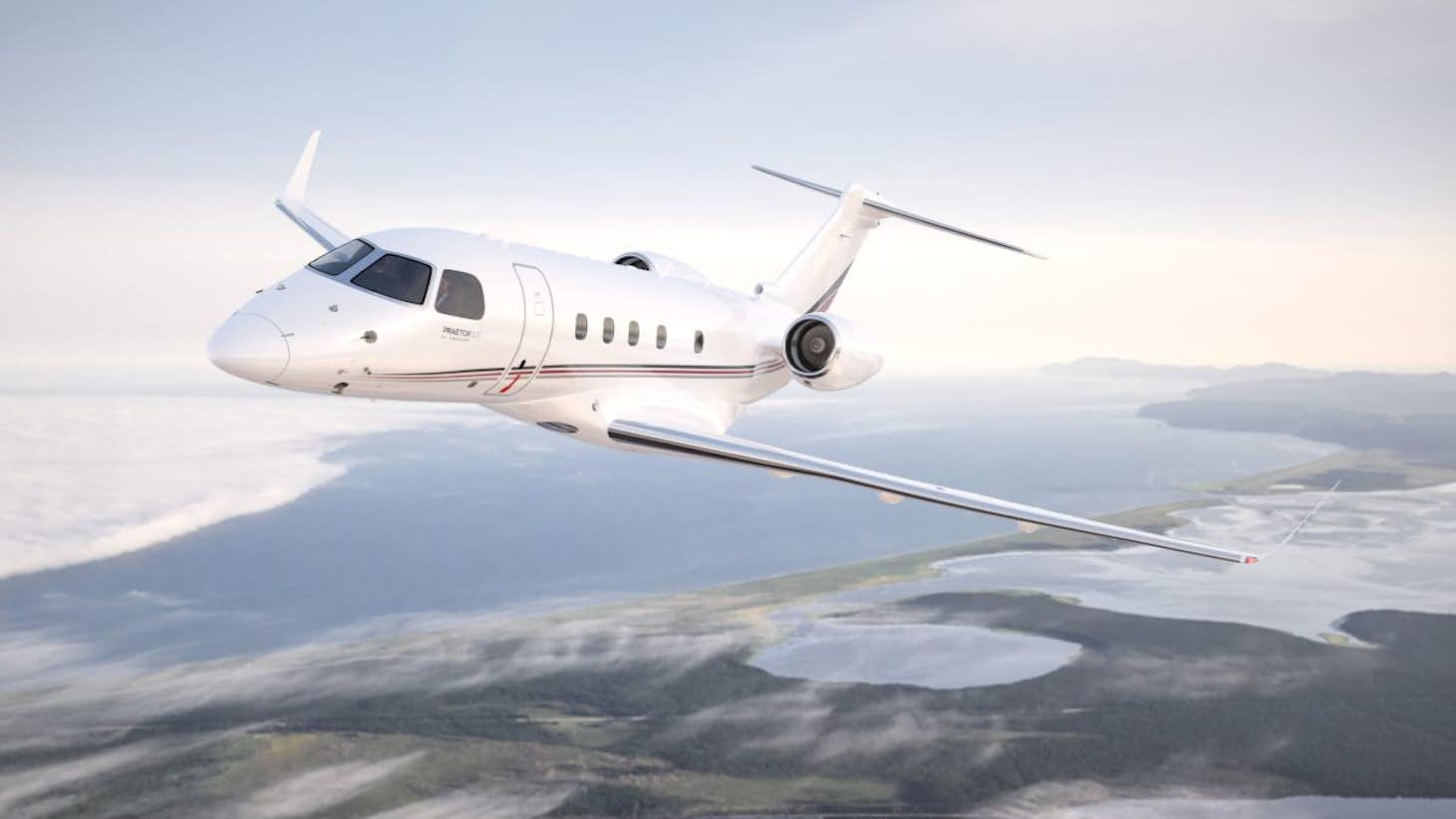
Even the newest aircraft can go AOG, short for aircraft on the ground, or in non-industry terms, a mechanical.
When it happens, it forces charter brokers and operators into a scramble to find replacement aircraft.
Until now, guaranteed recovery at no additional cost to the customer has been an advantage of many fractional and jet card programs over ad hoc chartering.
That’s because a replacement aircraft, called a recovery aircraft in private jet lingo, can mean paying another operator substantially more than the price that was paid to the original operator.
Under an ad hoc charter, that price is often passed on to the customer as a requote.
You can either pay the higher price or get a refund and make alternative plans.
In a recent discussion on the Ironbird Podcast, host Dan Harris, managing partner of Ironbird Partners, spoke with Josh Allen, founder and CEO of Charter Flight Support, and Erin Donnelly, the company’s chief operating officer.
What does Charter Flight Support do?
End consumers, their brokers, and, sometimes, the operators pay Charter Flight Support a fee.
If the aircraft goes mechanical, Charter Flight Support begins sourcing a recovery aircraft.
Charter Flight Support provides recovery options to the operator or broker who then books the recovery charter.
Charter Flight Support will cover the cost difference up to 100% of the original trip price.
It requires the operator to provide maintenance logs that prove the cancellation was a true mechanical incident.
Requiring proof helps cut through the fog where brokers and flyers often believe operators say the airplane is broken to cover for a variety of other possibilities, from crew duty time, to the aircraft being out of position, and not wanting to incur the expense of flying it to the customer, the owner taking their plane back for personal use, overbooking, taking another more profitable trip, or bumping a wholesale client for a retail customer.
The Charter Flight Support fee is typically 2.5% to 6.5% of the flight cost, depending on the operator and aircraft type.
The company doesn’t work directly through consumers, so it’s something a consumer can ask their broker or operator if they offer it.
Their conversation on the Ironbird podcast shed light on how mechanical recovery coverage is emerging as an increasingly important tool in the private jet charter ecosystem.
Something Goes Wrong
One of the most common questions brokers receive from clients, according to the trio, is if something goes wrong, won’t you always recover the flight anyway?
Harris says the answer is both yes and no.
Brokers will always try to recover a flight, but the options available often involve tradeoffs between cost and speed.
If a mechanical issue occurs, the fastest recovery aircraft might cost tens of thousands of dollars more than the original trip.
“If there’s a situation where you can depart on time but it’s going to cost $30,000 more, or you can delay four hours and only spend a couple thousand more,” Harris explained, “most brokers are going to choose the cheaper option.”
That’s where recovery support comes in.
Best Solution
Charter Flight Support’s model is designed to absorb the cost difference when the fastest recovery aircraft is significantly more expensive.
It is designed to act as a financial safety net, allowing brokers to prioritize the client experience rather than their own financial exposure.
“If you have this service,” Harris said, “you can easily take that $30,000 hit without it impacting you.”
Many in the industry assume the service is aimed primarily at retail charter brokers.
But according to Donnelly, that perception misses a large part of the picture.
“The biggest misconception is just understanding what the product actually is,” she said.
“People think it’s only for brokers protecting a trip,” Donnelly says, “But a lot of our biggest clients are operators.”
The service works in several different ways depending on the client.
Retail brokers can offer it to clients as an optional protection feature.
Operators can use it internally to manage recovery costs.
Operators can protect themselves when booking off fleet in the hybrid model, whether with operator-brokers that use their own fleet or with third-party operators.
The model’s flexibility means companies can deploy it in different ways, the executives said.
Some integrate the cost into their pricing, while others offer it as an opt-in protection option for customers.
When customers decline coverage, brokers may still choose to purchase it themselves to protect their margins and ensure a smoother client experience.
Mechanical Stress
Mechanical failures create pressure across the entire charter chain, from operators to brokers to the end customer.
The call or email from operators to brokers to advise of a mechanical cancellation is never a pleasant situation.
Donnelly says recovery support helps remove some of the tension from those conversations.
“Knowing that mechanical support is in place lowers the stress on both sides,” she said.
The service also allows operators to attempt recovery solutions within their own fleets when possible, potentially retaining revenue while still protecting the client.
The potential cost of recovery can be significant.
Allen said Charter Flight Support paid out over $4 million in recovery payouts last year, with some individual events reaching six figures.
“Those six-figure recoveries happen,” Allen said. “And most companies simply can’t absorb that kind of loss.”
Six-figure recovery expenses, he says, can put a small broker in a financial bind.
This financial protection is one reason the service has gained traction not only with smaller brokers but also with larger charter firms looking to protect quarterly results.
Cancellation Statistics
Because Charter Flight Support sits at the center of recovery events, the company has accumulated a large dataset on mechanical disruptions across the charter market.
According to Allen, the average AOG disruption rate across charter flights is roughly 10%.
Based aircraft fleets generally perform slightly better than that average.
Floating fleets tend to have slightly higher disruption rates.
The company also tracks aircraft types with higher-than-average mechanical interruptions.
However, the data also shows performance on the same type of aircraft varies widely between operators.
Allen pointed to one operator flying Citation X aircraft that dramatically outperformed the rest of the fleet.
Allen says that the overall disruption rate for Citation Xs is 14%.
However, excluding Baker Aviation brings the Citation X disruption rate above 20%.
Maintenance and operational discipline can have as much impact on reliability as the aircraft type itself, Allen says.
According to Charter Flight Support, Solairus Aviation was the most reliable operator in 2024, with a reliability rate of around 98%.
In April, they will reveal the 2025 winner.
However, Allen said performance can be fleeting.
While some operators have AOG percentages as high as 30%, performance varies.
One company that was in the bottom tier for reliability improved significantly.
“They changed part of their fleet and have gotten better,” he says.
Donnelly and Allen both say brokers need to do a better job of actively evaluating their list of “do not use” operators.
The pair says operators are often added to the list and stay there.
Both Allen and Donnelly will share insights from data when they see improvement among operators who have had reliability issues.
Lead Times for Recovery
Contrary to what many assume, most mechanical issues in the Charter Flight Support spectrum, at least, are not discovered at the last minute.
Donnelly said about 50% of recovery events occur the day before departure, giving recovery teams time to source replacement aircraft.
The remaining events are split between same-day failures and issues discovered several days before a flight.
The mechanical situation is often discovered when the aircraft lands from its previous trip, Donnelly says.
Even same-day disruptions can often be resolved quickly.
“If we have five or six hours’ notice in the morning,” she said, “we’re usually able to find an on-time replacement unless it’s a very remote location.”
As the company grows, Charter Flight Support is investing heavily in technology to manage the complexity of sourcing replacement aircraft.
The firm recently hired a chief technology officer to build internal tools designed to automate parts of the recovery process.
One internal platform uses artificial intelligence to analyze incoming charter requests, extract key data from emails and documents, and accelerate quoting and sourcing workflows.
Allen said the goal is not to replace staff but to allow the company to scale while maintaining service quality.
“AI is about enabling our team to move faster,” he said.
He added, “It’s not reducing headcount.”
Growth Plans
Today, the company works with roughly 100 clients.
That includes some of the largest brokerage firms in the industry.
Allen expects that number to grow significantly.
Right now, operators and brokers tend to use the service strategically rather than across the board.
The company’s long-term goal is to support $1 billion in charter volume.
Allen says that the milestone is achievable within the next few years.
“Ultimately,” Harris said, “everyone in the chain wants the same thing-getting the client where they need to go.”
Find the perfect solution for your private aviation needs
Save Time. Buy Confidently.
Receive an apples-to-apples comparison of programs that meet your needs from more than 500 jet card and fractional options covering 65 points of differentiation and over 40,000 data points.