In an industry where flyers pay big money to save time, delays and flight disruptions due to maintenance issues are likely to continue, according to new research.
Two-thirds of maintenance professionals expect the aviation parts environment to worsen, with only 15% thinking it’ll improve.
The data comes from the 2026 General Aviation Parts Survey, conducted by TBX and based on aviation parts platform Airworthy customers.
The survey gathered feedback from aviation maintenance professionals to better understand the industry and market.
Rising costs and supply chain pressures were the biggest challenges facing general aviation maintenance, 65% of respondents said.
Asked about the parts supply environment, 22% of survey respondents said it was worsening significantly.
44% said it was worsening slightly, 19% said it was staying the same, and 15% said it was improving.
On the other hand, respondents said pricing, lead times, and part availability were their biggest issues with suppliers, while noting relative satisfaction with shipping speed and technical support.
Survey and respondents overview
Of the 345 survey respondents, 77% represented general aviation maintenance shops and 18% were from flight schools.
Business aviation MRO respondents made up 11% of the sample.
63% said their primary customer type was owner-flown private aircraft.
Industry problems
When asked, in a free-form response, what their biggest pressure was, the biggest theme was time: how quickly aircraft could be turned around, and parts could be procured.
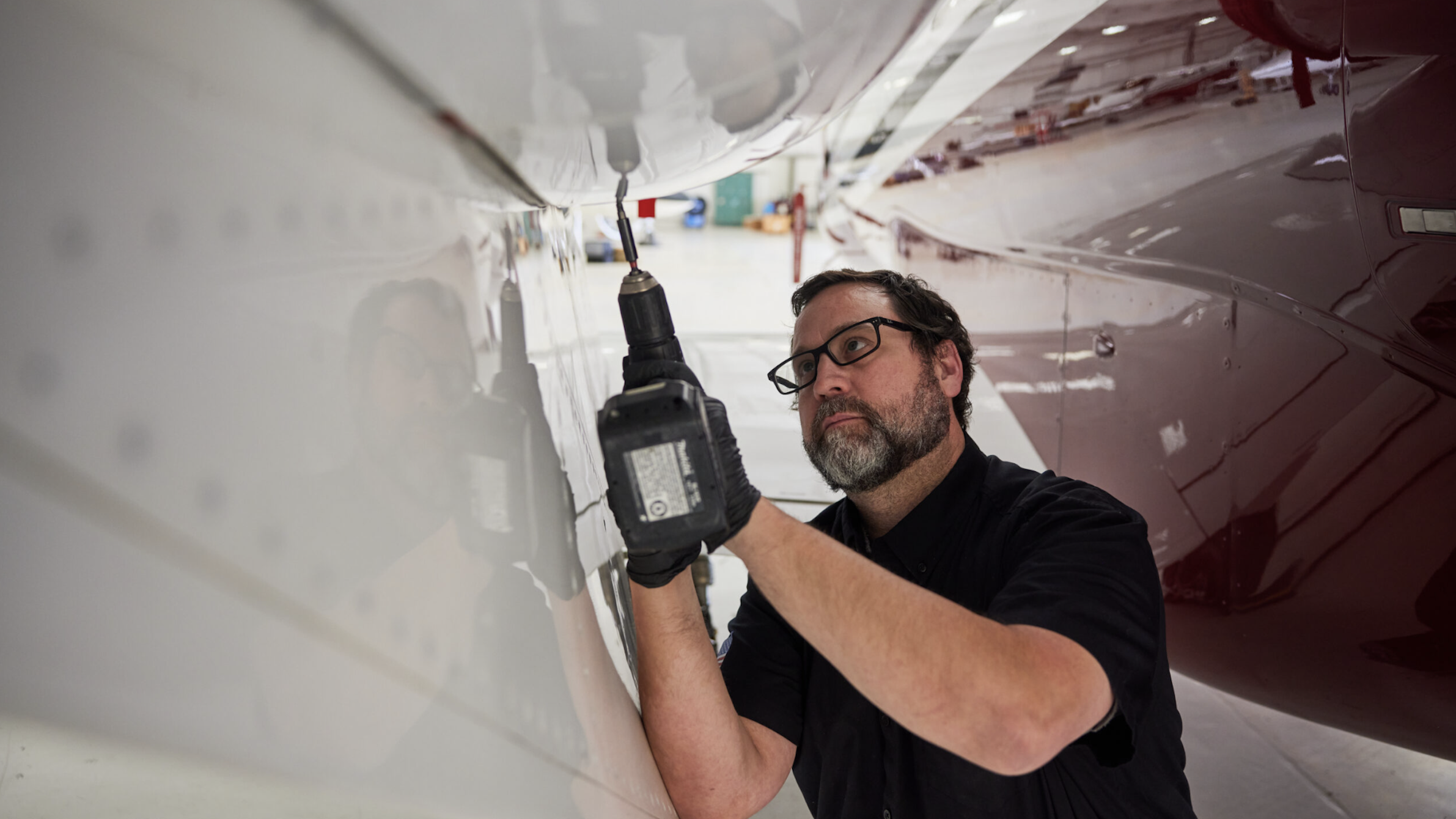
“Maintenance shops are spending too much time searching for parts, finding part numbers, waiting on backorders, and sourcing alternatives — not to mention the time spent explaining those options, or lack thereof, to customers,” said John McLaughlin, Airworthy CEO, in a press release about the survey.
McLaughlin continued:
‘As the GA (general aviation) fleet continues to age, improving parts availability, expanding access to technical data, and giving maintainers more options — whether OEM, PMA, or serviceable parts — will be critical to keeping these aircraft flying.’
Respondents said authorized or independent distributors were their most common source of parts, followed by salvage/teardown, then OEMs.
PMA parts, aircraft parts with FAA approval for manufacturing and sale, exceeded OEMs on availability and cost, according to respondents.
Quite a favorable impression, given that 65% said they chose between OEM and PMA parts based on price and availability, rather than preferring either inherently.
Constraints causes
According to the report, the main reasons for both the constrained parts market and the lack of OEM support are OEM consolidation, discontinued production runs, and a stretched maintenance workforce.
“It’s hard to find parts for legacy aircraft,” said one respondent, “When the manufacturer refuses to provide support and refuses to allow anyone else to repair a broken part.”
“Many OEMs are flying blind to what owner/operators are experiencing,” said the report’s executive summary, adding, “while also focusing their resources on selling new aircraft versus supporting existing owners.”
Exhaust system parts were cited as the most common parts that broke, at 37%.
Avionics came in at 34% and engine components at 33%.
When asked what could have the greatest positive impact on the environment, two answers tied at 33%: easier access to IPCs, part numbers, and technical data, and greater PMA availability for hard-to-find parts.
Similarly, when asked to rate what they valued most out of suppliers, respondents preferred parts availability and inventory depth, followed by pricing and shipping speed.
When asked how frequently OEMs’ problems caused aircraft service delays, nearly 90% of the industry reported delays at least monthly, with 37% weekly and 9% every day.
Maintenance delays
ATI Jet/Jetvia is currently suing Pratt & Whitney Canada over alleged failure to provide support as part of an engine program.
It follows a similar lawsuit by Flexjet, Inc. against Honeywell.
That lawsuit was settled in December, with Flexjet receiving over $1 billion in cash and services.
Last year at Corporate Jet Investor, Nicholas Air CEO Nicholas Correnti blasted OEMs.
“I don’t think there’s a supply chain issue,” he said.
Correnti added, “We’re producing airplanes at a staggering rate.”
The CEO pointed to backlogs of up to two years.
He noted, “All those airplanes being produced and sold off the assembly lines have to have the parts that the current aircraft that are in circulation need.”
He continued, “Who I feel sorry for is the one, two, three airplane operations, or the young entrepreneur… They’re not going to make it. They are going to fail.”