November 18, 2025
The rush to close sales and push private jet flyers into solutions that are misaligned with their needs hampers user satisfaction experts say.

Overpromising, lack of knowledge among sellers and buyers, and the complexity of delivering on-time departures are the Achilles’ heel for private jet operators, brokers, and consumers.
The key is more education for consumers – and it extends to both new and existing users.
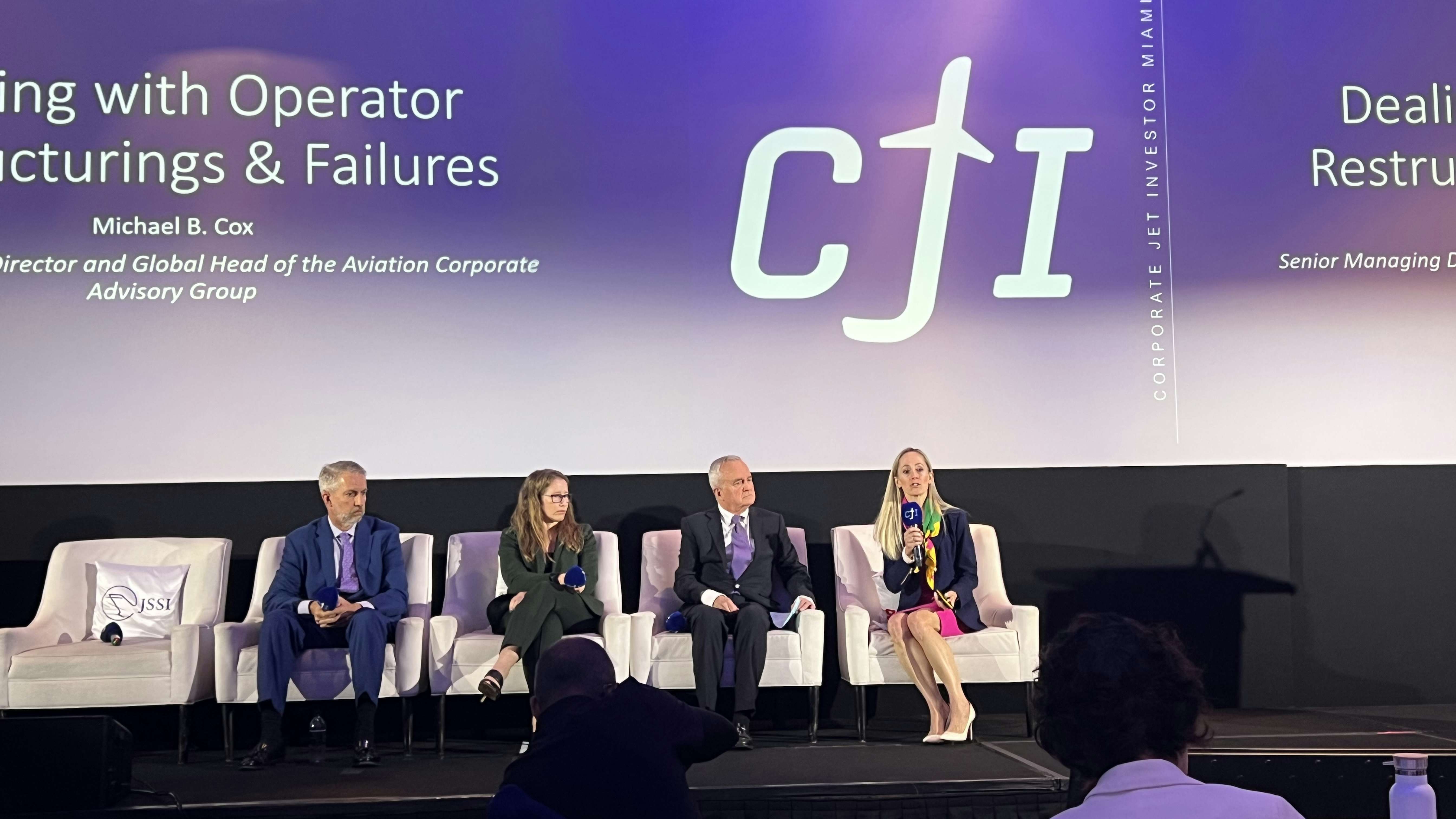
That’s according to a panel of industry experts speaking during the recent Corporate Jet Investor conference in Miami.
Vista America President David Stanley told the audience, “Covid brought a lot of customers in for the first time who hadn’t flown before, and they expected it to be easy and seamless.”
He continued, “Users of private aviation weren’t set up properly with their expectations to say planes break and there’s weather and there’s all kinds of other things that affect commercial aviation that affect private aviation.”
Stanley noted, “What I’ve come to see is if we set those expectations properly for them now, they’ll be lifelong users of private aviation.”
He added, “If they come into it in the wrong way, they’ll end up leaving. They’ll say, ‘I had the money, but it was not even a better experience for me.'”
Stanley said, “They need to be educated because it’s big dollars and there’s a lot of people chasing the big dollars…If you can educate them on the good and the bad in this business, then I think they’re going to come out ahead and continue to use the product.”
READ: Comparing the 5 ways to fly privately
Global Jet Capital’s Mike Christie agreed.
He said, “There are a lot of things (in private aviation) that if you go in blind, your expectations can be very disconnected from reality. And that’s where you get people buying something and then deciding private aviation isn’t for them.”
Darren Large of Morristown Airport emphasized the need for basic education for new flyers.
He told the audience, “We’ve literally had people have picnics out in front of the FBO before they get on the plane because they just don’t know. And we tell them they can get catering to go on the airplane. So, it’s interesting to see this. They arrive at the airport and aren’t used to flying out of a private airport. They don’t really know what the FBO is.”
He says since Covid, there are “more younger couples, and kids, and it’s definitely a more leisure-oriented market.”
At the same time, family offices, wealth advisors, and companies benefit from continuing education on the basics, according to Christie.
Christie says, “Look at some of the family offices and the corporations that we serve, that by the time they get to the next jet, the treasury contact that was involved in financing the jet has moved on to a new role. Usually, you might have a new CFO. You’re going to have some changes in the aviation department. So even within the customer, by the time they get to that next purchase, if they were relying on their team to help them with the purchase, that team needs to be re-educated because you’ve got a new team.”
Moderator Rollie Vincent noted that the average C-suite tenure is about three years.
Aviation Portfolio’s Craig Ross put it this way:
‘The key is educating the client, which is easier said than done. The challenge is that, as this industry has grown, the consumer is too often private aviation illiterate, which fundamentally is going to cause headaches, period, because they don’t understand the industry. And then, compounding that issue, there are too many industry customer service reps who are barely private aviation-literate. And that compounds the issue. You have two people who don’t know what they’re talking about, and the industry is trying, but they’re trying to keep up with growth. So if all of these big brands are growing, that means they have to keep hiring and training. It’s tough.’
Ross says, “I also think (consumers) want to be educated. They don’t know how to be educated. They’re not spending the time to get educated. They would love to know (about private aviation) in the same way they know about art, wine, real estate, etc.”
READ: Avoiding Mistakes: Understanding Primary Service Area
Misaligned expectations run across the industry, panelists said.
Stanley claimed, “There’s a lot of overpromising and underdelivering in our industry.”
He continues, “It needs to be done right from the beginning. There’s a lot of doing whatever you need to do to get the deal done in our business, and it hurts the customer.”
Stanley said that with aircraft management, it can be expensive to move from one management company to another, with pilot retraining and lost charter opportunities while the airplane is moving between the operator’s Part 135 certificates.
Global Jet Capital’s Mike Christie agreed that the letdowns are not just with fractional, jet card, and charter flyers but also affect private jet owners, particularly owners of single aircraft.
First, he notes, was the pilot shortage, and increased salaries.
While that has passed, maintenance is now a pain point.
He cited “the amount of AOGs.”
AOGs is shorthand for aircraft on the ground, which means your airplane broke away from base.
Christie said, “We’re getting a lot of feedback right now that the real focus is on the cost, the availability, and the timing of maintenance.”
He told listeners that while corporate flight departments with multiple aircraft can cope, owners with a single jet are most impacted when that airplane is grounded due to maintenance downtime.
Vista’s Stanley noted, “One AOG creates a ripple effect.”
The company has added its own maintenance facilities, “where we control our own destiny.”
However, AOGs mean going off-fleet and sourcing a replacement aircraft, something many jet cards and fractional programs guarantee at the original flight quote price.
They often lose money because the cost of the last-minute replacement aircraft exceeds the original price.
Yet clients who only know they were delayed and don’t appreciate the expense of sourcing a recovery jet on short notice are left unhappy.
Record demand is making it more challenging.
He said, “That need to have aircraft available for clients is that big push. Client demand for aircraft is insatiable.”
READ: Fine Print: Not all Jet Card cancellation terms are the same
Stanley says the unpleasant surprises include when clients make the leap from charter to jet owner.
As owners, they are often surprised at the math.
Stanley says, “Think about the charter customer who buys a plane, and then starts chartering that plane out, and it has not been properly explained to them how charter works. That the $6,000 an hour that you’re paying them to charter their plane is a lot different than the $10,000 they were paying before when they were a charter customer.”
He continues:
‘And where that $4,000 goes, and it doesn’t go into (the management company’s) pocket. It goes to a whole bunch of things between a charter broker who’s doing a markup and overnights for the crew, etc. So, it really comes down to, like, teaching them that, and sometimes they don’t want to listen anyway. But we can do the best we can, at least say we did explain this to you at one point.’
Another factor in customer experience is the actual airplane.
Floating-fleet operators’ models call for flying aircraft for over 1,000 hours per year.
That compares to based aircraft, where the owner allows them to be chartered when they don’t need them.
Those managed jets may clock less than 400 hours per year.
Stanley calls it “a champagne problem.”
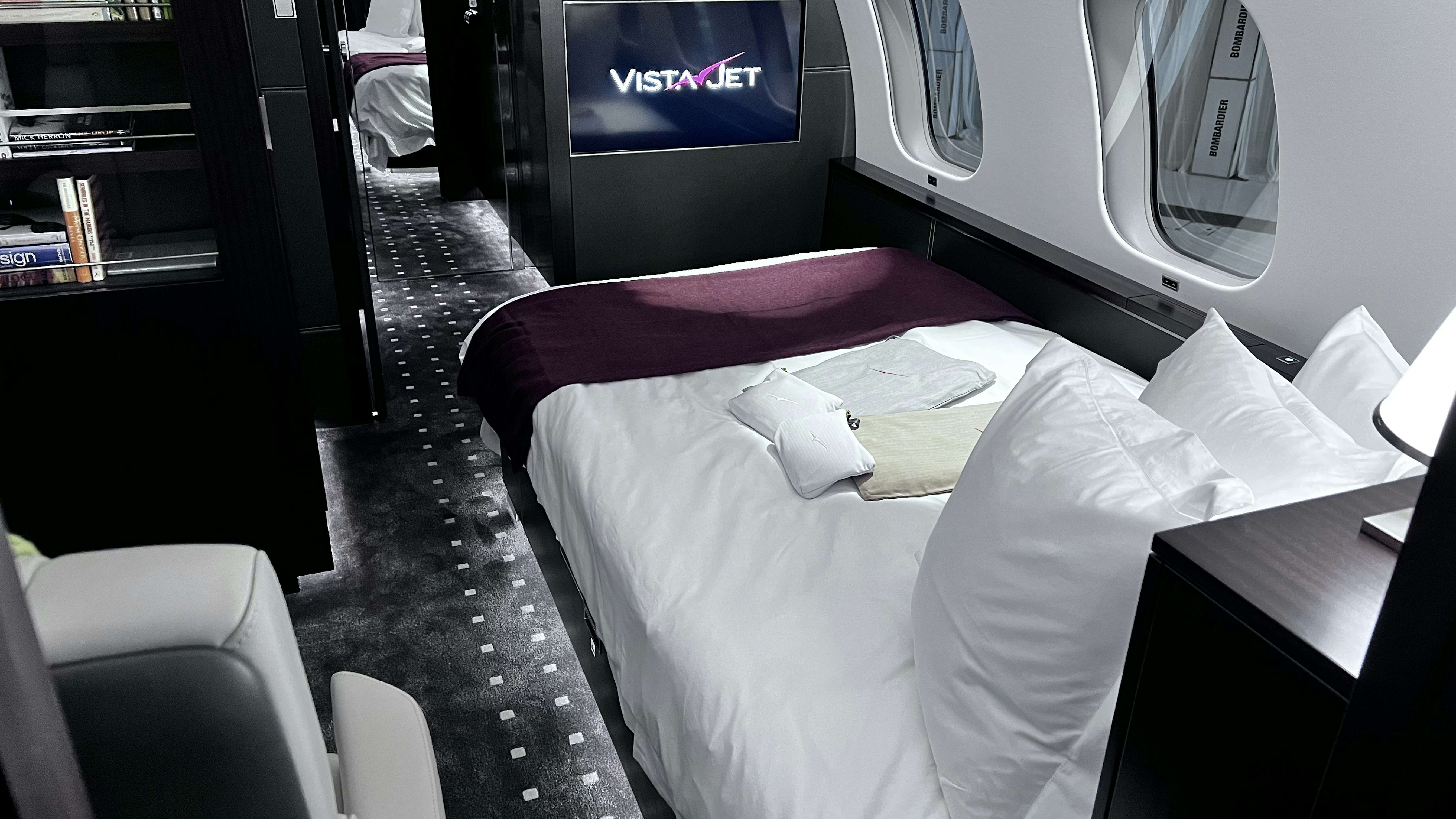
Still, there is a big expense in keeping “our aircraft looking good.”
And while Vista has in-house capabilities, it also means more downtime when jets are not available.
Large says airports often don’t get enough attention for their critical role.
The proliferation of larger ultra-long-haul jets on the ramp can create gridlock.
Making real-time data available to operators on construction and other factors that impact congestion and cause delays can sometimes help prevent them, he said.
Morristown Airport is a frequent destination for President Donald Trump during the summer.
Flight providers should proactively discuss potential hiccups with clients to plan for alternative airports or flight times.
READ: Beware of this sentence in Jet Card and Ad Hoc Charter contracts
Christie told the audience that the media often focuses on what’s hot in terms of growth.
For example, there is plentiful coverage of the surge in fractional ownership.
He said there needs to be more industry focus on customer needs.
Christie told listeners:
‘The needs of the customer are going to drive the solution that they ultimately go to. And when you’re running 400 or 400 plus hours a year at some point, you’re going to start thinking that having my own aircraft…having control of my own aircraft is really important at that point. And so, they’re going to want to have their own assets, which we’ve gotten a broadened avenue for people to access business aviation. And then it’s just a matter of where people are going to fall based on their needs and how their needs evolve. I know Flexjet’s been really big in trying to be backup lift, that supplemental lift that corporate aviation departments used to use charter for. And now you’re starting to see some (private jet owners) get 25-hour cards just to have that to back up and (and) be a gap between a two aircraft fleet and a three aircraft fleet.’
Ross agreed that media focus on soundbites obscures core market needs.
Supposed education by flight providers is often thinly veiled promotional material designed to hype their solutions.
Ross told the audience:
‘If you listen to all these presentations there’s a lot of buzz about younger (consumers) buying larger (private jets and) taking longer flights international, and while yes maybe there’s an uptick there we’re not seeing any down tick in those one and a half to two hour flights where people want smaller planes, and that is an area that is a deteriorating (quality) segment in the charter and card space with older planes. I’m not putting the Praetor 500 or the Latitude in the midsize cabin category. It’s an aging fleet. The cabins aren’t kept up as much. That’s your entry-level point for most people who come into the space. I think that’s an area where there’s an opportunity for somebody to come in below the 50-hour (per year usage) mark.’
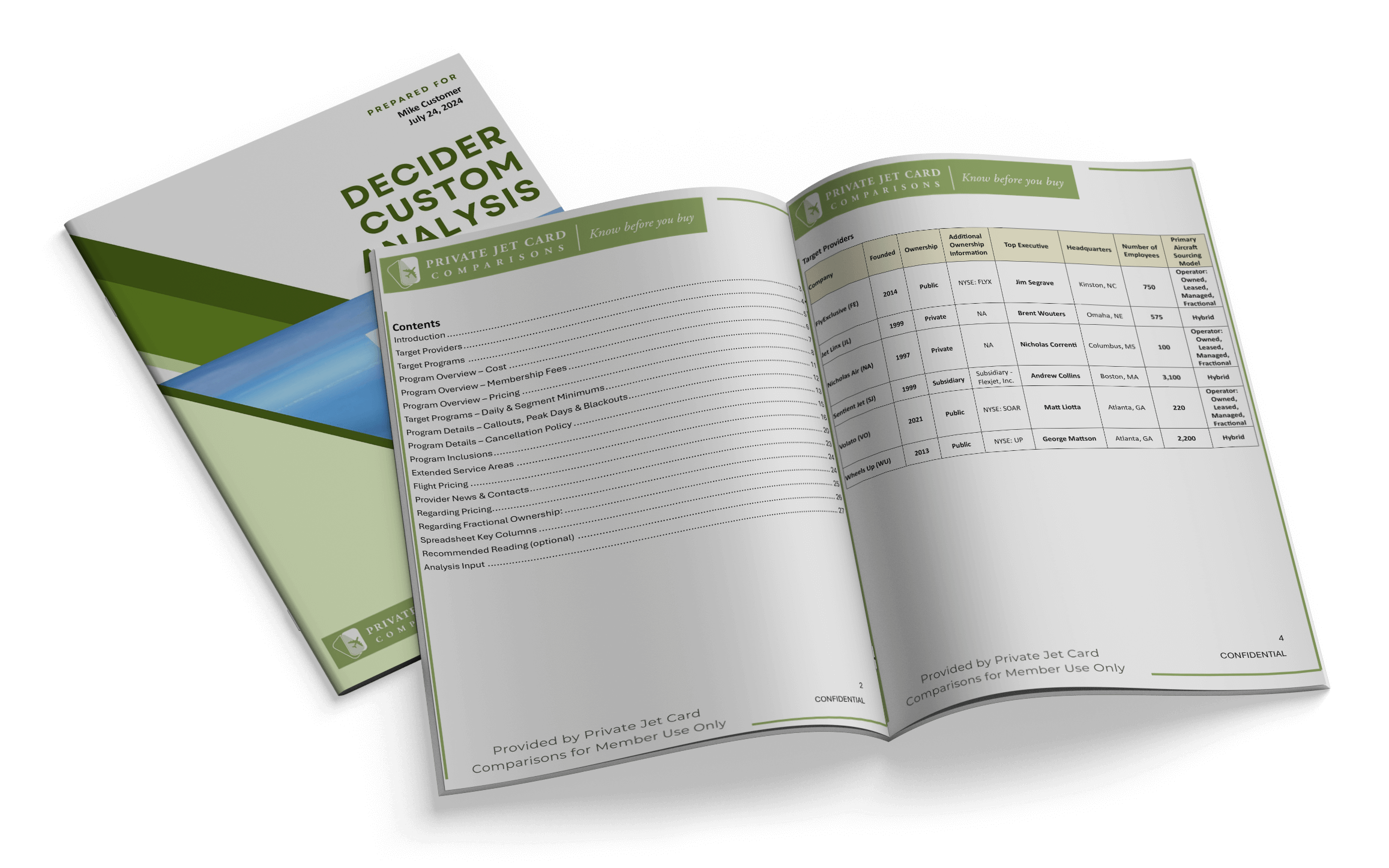
Data from subscribers to Private Jet Card Comparisons who request an analysis to identify solutions that best match their needs backs up Ross.
While the percentage who say they need a super midsize jet has increased from 19.1% in 2021 to 23.7% this year and large cabin demand has ticked up from 6.2% to 6.4%, the percentage who want light jet access has held steady moving up from 51.0% in in 2021 to 51.6% this year while demand for midsize jets has risen from 30.7% to 37.4%.
What’s more, a significant portion of the market says they are open to turboprops if they can save money.
Currently, 39.6% would use turboprops to save, down slightly from 43.6% in 2021.
As more products “flood the market,” Ross said the key is to get transparent, unbiased education and insights to find resources, “not making money on transactions, but it’s hard not to make money on transactions.”


Find the perfect solution for your private aviation needs
Save Time. Buy Confidently.
Receive an apples-to-apples comparison of programs that meet your needs from more than 500 jet card and fractional options covering 65 points of differentiation and over 40,000 data points.